
Tape and Mud Drywall in Oak Cliff TX
A remodeled opening can leave a visible outline if the new board does not meet the old wall correctly. Good finishing starts before the first coat of mud. Stone Drywall Solutions provides drywall tape and mud services in Oak Cliff for remodels and home additions. Our team brings over 20 years of drywall and finishing experience to the work.
Our drywall finishers assess the connection between surfaces and identify the finish you want. That gives the taping and mudding a clear purpose beyond simply covering the joint.
Call 469-999-8302 to discuss drywall taping and mudding for your Oak Cliff property.
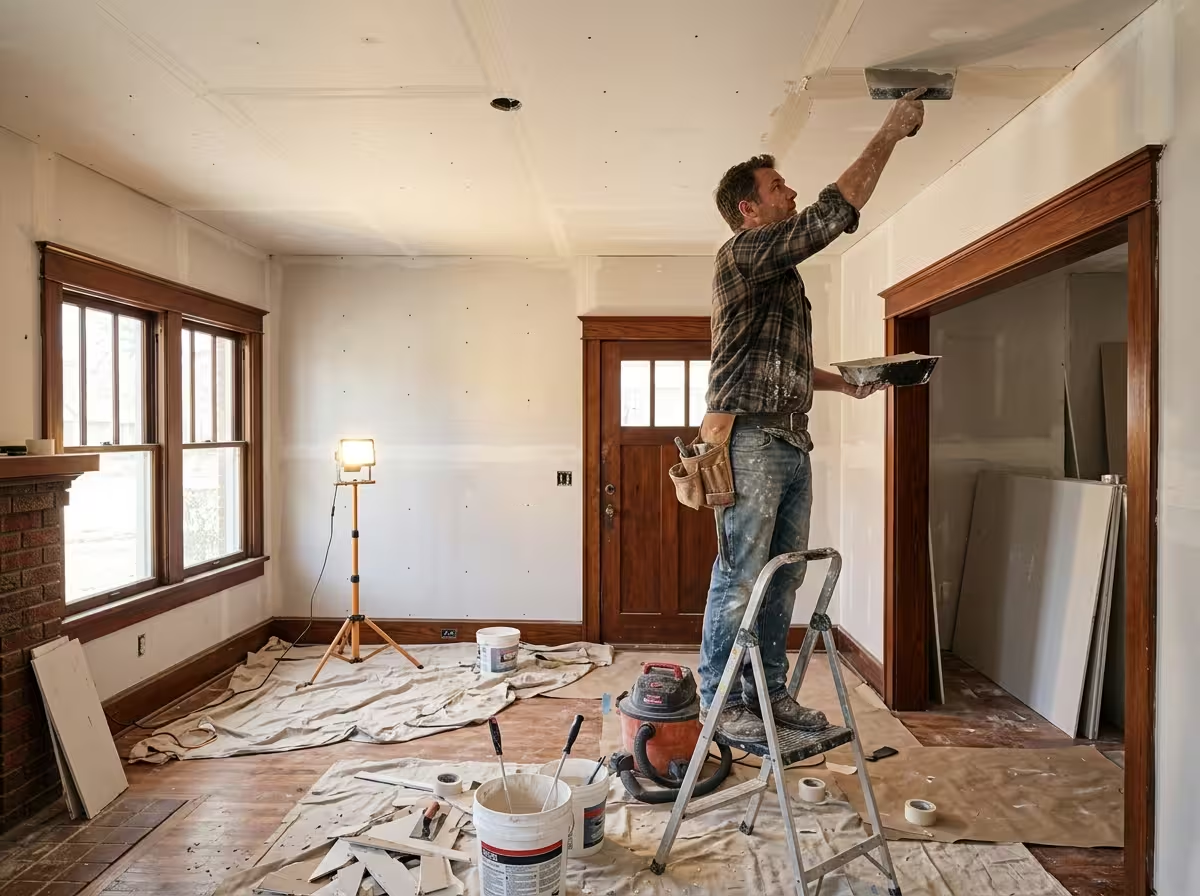
Our Drywall Taping and Mudding Services Oak Cliff, TX
- Seam taping. Joint tape is bedded over aligned, supported board edges.
- Compound coats. Successive coats build a controlled transition across each joint.
- Inside corners. Our finishers establish consistent lines at wall and ceiling connections.
- Outside corners. Edge profiles are reinforced and finished for the intended appearance.
- Fastener treatment. Fastener heads receive finishing within the agreed surface level.
- Replacement-board joints. Old-to-new connections are treated after panel alignment is checked.
- Surface review. Sanding and inspection prepare the finished joints for priming or decoration.
The finish level is agreed before work starts. Joint finishing does not correct movement in an unstable assembly.
Drywall Taping and Mudding for Oak Cliff Bungalow Remodels
Bungalow renovations in Winnetka Heights and established neighborhoods near Bishop Arts often involve selective changes. A kitchen opening may become wider while nearby trim remains. A bathroom update may replace only part of a wall. These projects need careful fitting before drywall joint taping can produce a consistent surface.
Working Around Existing Wall Thickness
Older rooms may combine plaster with later drywall repairs. Their thicknesses can differ at the same opening. New gypsum board needs suitable support and alignment with the retained surface. Where the difference is substantial, correcting the backing is more useful than trying to bury it beneath compound.
Original baseboards and door trim create another limit. Bringing a replacement wall too far forward can reduce the visible depth of the woodwork. Setting it too far back leaves an awkward edge. The repair should account for those relationships before the board is fastened.
Drywall tape installation reinforces a suitable joint, but it does not replace firm backing. A narrow patch that moves when pressed can crack after finishing. Our joint-finishing specialists check the panel and its edges first. Once the base is secure, successive coats can blend the connection across a wider area.
Finishing Remodels Without Reworking the Whole Room
Selective finishing can protect more of the surrounding interior. That works best when the repair boundaries leave enough room to spread the compound. A tiny opening does not always mean a tiny finishing area. The blend may extend well beyond the replaced board to avoid a raised outline.
Bathroom work also needs the correct material in each location. Standard drywall mudding is not a waterproofing system for a shower. Surfaces receiving tile or direct water exposure must follow their required assembly. Define those boundaries before treating the whole room as ordinary painted drywall.
Display lighting can change as a shop or gallery changes its stock. Our acoustical ceiling professionals plan how fixtures will move before fixing the ceiling layout. A panel that lifts out is useful only if there is enough clearance above it. Tight spaces around beams or ducts can limit access.
Lighting tracks and hanging displays also need appropriate support. Ceiling panels should not carry loads they were not designed to hold. Share display plans during the assessment so support can be coordinated with the relevant installer. This avoids later damage from improvised fixings.
A sample panel helps reveal how the surface looks under shop lighting. View it from the entrance and beneath the intended fixtures. A strongly patterned tile may draw attention away from artwork, while a quieter finish may better suit a display-focused room.
Preventing Visible Seams Where Oak Cliff Additions Meet Older Rooms
Room additions and enclosed porches create connections between construction from different periods. Ceiling levels may vary, and the framing may not align perfectly. Those differences deserve attention before finishing begins. Taping and mudding can blend a sound transition, but they cannot correct a moving or poorly aligned structure.
Checking Movement Before Covering the Connection
A recurring crack near an addition may have more than a cosmetic cause. Tell the contractor when it appeared and whether earlier repairs failed. Changes in the opening or nearby surfaces may require separate investigation. Applying wider tape does not resolve an underlying framing or foundation problem.
Some construction joints need a designed movement detail rather than ordinary joint covering. The project team should identify those requirements before finishing. A connection intended to allow movement should not be filled solid simply to create a continuous appearance.
Blending Wall and Ceiling Transitions
Butt joints occur where board ends meet without factory-tapered edges. They often need broader finishing to soften the slight buildup over the tape. A narrow stripe of compound can leave a visible band after painting. The finish should spread gradually while staying as controlled as possible.
Ceiling connections can be particularly noticeable because window light travels across them. A small height change may cast a long shadow. Our drywall finishers check board alignment before drywall ceiling taping and mudding starts. Where correction is needed, address the installation rather than relying on extra sanding later.
The older room’s surface texture also affects the result. A smooth new ceiling beside an aged textured one creates a visible boundary even if the seam is sound. We agree on the full visible finish. Texture matching or wider resurfacing may need to be included separately.
Our Drywall Taping and Mudding Process Oak Cliff, TX
- Board assessment. Our drywall finishers check panel alignment, support and fastening before planning seam treatment and the intended decorative finish.
- Joint reinforcement. Tape and compatible compound reinforce joints and corners. Weak or moving board is identified before a finishing layer covers the connection.
- Finishing level. Lighting and planned paint establish the finish-level discussion. Any broader surface treatment is identified separately from ordinary joint finishing.
- Compound coats. Successive compound coats form a controlled transition across seams, with the required drying between stages. Raised edges are addressed during finishing.
- Sanding and inspection. Our joint-finishing specialists sand and inspect the surface under representative light, then confirm readiness for the next primer or texture stage.
Why Choose Stone Drywall Solutions for Drywall Taping and Mudding
- Board condition checked first. Joint finishing starts with support and alignment rather than extra compound over an unstable base.
- Decoration considered early. Our drywall finishers use the room’s light and intended paint to establish the surface requirements.
- A local finishing business. More than 20 years of drywall and finishing experience back our bonded and insured company.
Our Previous Work
The meeting point between an addition and an older room deserves close attention in an Oak Cliff remodel. Our portfolio helps explain the appearance you want at those connections.
Prepare Your Drywall for Decoration in Oak Cliff
Contact Us or Call our drywall finishers at 469-999-8302 with details of the installed board, room lighting and planned paint or texture. Our drywall finishers check the change in plane where an addition meets the older room before treating the joint.
Drywall Taping and Mudding Questions and Answers
A joint where an addition meets an older room can need alignment work before finishing. Short detailed corners and earlier coatings also change preparation. Those tasks explain why equal board areas do not always involve equal finishing time.
Joint quantity, finish level and drying between compound coats determine the schedule. Temperature and ventilation also affect readiness for sanding and primer. We plan the finishing stages without treating a dry surface as proof that every layer is ready.
No. Tape and compound finish a supported joint; they do not stabilize loose board or moving framing. The cause needs attention before finishing. Once the base is sound, correct joint treatment provides a lasting surface for decoration.
Not if the joint keeps moving. The cause needs assessment first. A sound repair depends on stable materials and the correct joint treatment.
Yes, when the height, support and surface condition allow a consistent transition. Our finishers inspect the connection before agreeing on the result. A significant difference in ceiling plane needs attention beyond the joint compound.
Oak Cliff, TX Services
Transform Your Space with Expert Craftsmanship
Stone Drywall Solutions is your trusted partner for all drywall and painting needs. Contact us today for a free consultation and let us bring your vision to life with quality services you can rely on.