
Drywall Texturing in East Dallas TX
A new wall section can look out of place even after it has been painted the same color. The pattern may be too coarse, or the repair may sit higher than the surrounding surface. Stone Drywall Solutions provides drywall texturing in East Dallas, backed by over 20 years of industry experience.
Our drywall texture services cover new surfaces and updates to existing interiors. The work starts with the finish already in the room. Checking its condition and appearance helps us decide how far preparation should extend before a new pattern is applied.
Call 469-999-8302 to discuss drywall texturing for your East Dallas property.
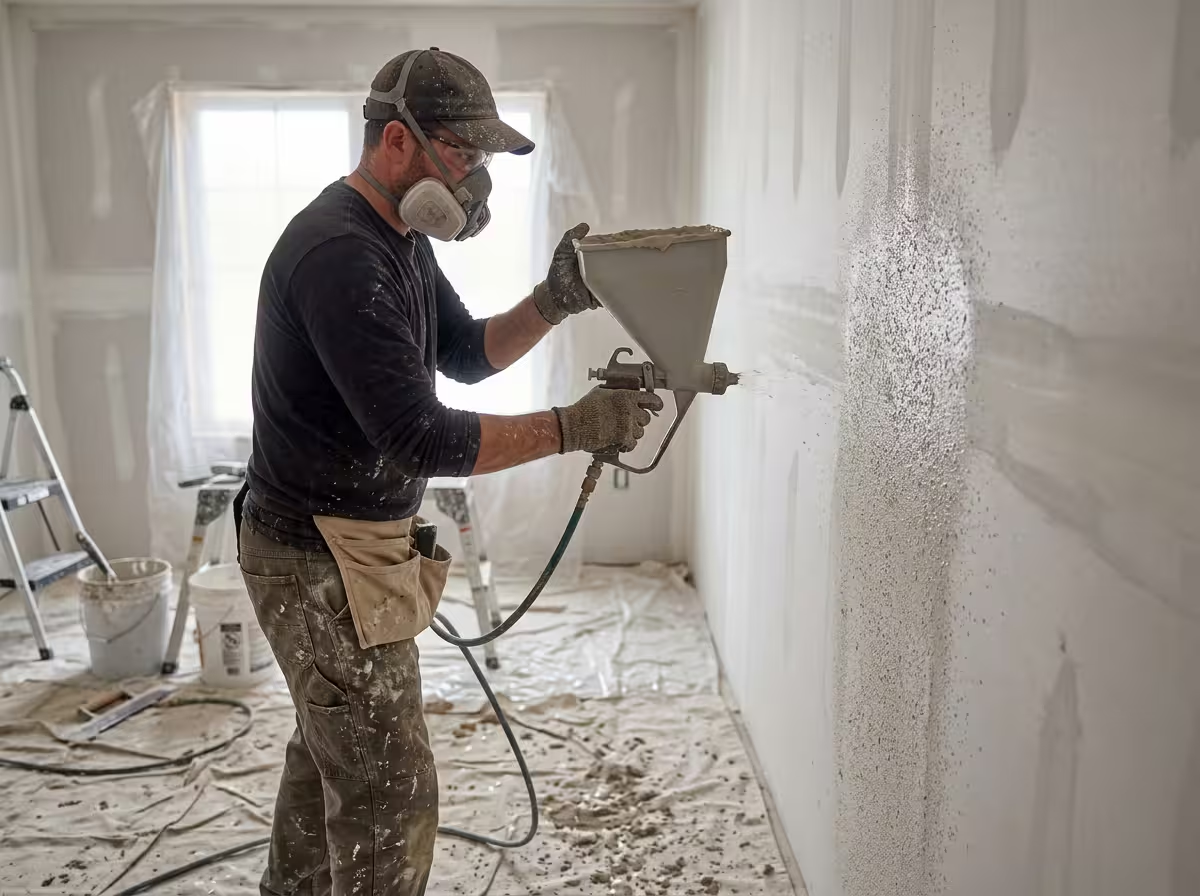
Our Drywall Texturing Services in East Dallas
- Orange peel. Application follows the pattern size and density established through a sample.
- Knockdown. Flattened marks are controlled for the agreed size and spacing.
- Wall repair blends. Our finishing team compares the patch with the retained texture before application.
- Ceiling texture. Existing variation and room lighting guide the blend boundary overhead.
- New surfaces. Prepared additions and remodeling surfaces receive the agreed pattern.
- Wider retexturing. A larger surface can be treated where a local blend would leave a visible edge.
- Base preparation. Raised patches and loose material are addressed within the preparation scope.
The existing surface and desired pattern guide preparation. Priming and painting are separate parts of the agreed scope.
Blending New Drywall Textures With Original Plaster in Historic East Dallas Homes
Homes in Junius Heights, Munger Place and the Swiss Avenue area may contain plaster beside drywall added during later renovations. These materials can look different even beneath the same paint. Older plaster may have gentle variations from hand finishing, while newer gypsum board has a more uniform face.
Checking the Surface Before Choosing a Finish
The base needs to be sound before texture blending begins. Loose plaster and peeling coatings should not be covered with another layer. Cracks also need checking for movement. A decorative finish can soften minor surface marks, but it cannot secure material that is separating underneath.
Plaster and drywall may absorb moisture differently. Preparation and compatible priming, where required by the finish system, help control those differences. The depth of the join matters too. A raised repair can remain visible through texture because the problem is the surface level rather than the pattern.
Preserving Trim and Architectural Details
Original moldings need protection during application. Heavy material around a narrow trim edge can change its appearance or leave a rough border. A restrained finish often makes more sense where detailed woodwork already gives the room character.
Choosing among drywall texture types should begin with the surrounding walls. Orange peel drywall texture creates a fine, pebbled appearance. Knockdown drywall texture has flattened areas with spaces between them. Neither automatically reproduces old plaster, so the proposed finish should be compared with the actual surface before proceeding.
Some rooms benefit from a compatible smooth finish instead. The aim is visual consistency across the old and new work. Matching the way light falls on both surfaces can matter more than assigning the existing finish a standard name.
Matching Wall and Ceiling Textures in Lakewood Home Additions
An addition creates a different challenge: making a newly finished room connect with established living spaces. Around Lakewood, large windows can cast light across adjoining walls and ceilings. That side light can expose changes in pattern that are less noticeable under central ceiling fixtures.
Matching Scale and Density With Test Samples
A texture name describes a general style, not an exact pattern. Orange peel can range from fine to coarse. Knockdown can be sparse or closely packed. A useful sample matches the size of the raised areas and the amount of open space between them.
For spray-applied texture, material consistency and equipment settings affect the result. Application distance matters as well. A test sample allows these variables to be adjusted before the full surface is treated. The sample should dry before its appearance is compared with the existing wall.
Managing Continuous Ceiling Surfaces
A ceiling that runs from an older room into an addition offers few places to stop the finish. Ending texture at the construction joint can create a visible band. A wider blend or refinishing to a natural boundary may provide a more consistent appearance.
Drywall ceiling texture also needs an even base. New joints must be finished before the pattern goes on. Checking the transition from several positions helps reveal ridges and changes in density. Paint should follow the approved result, rather than be expected to hide a poor match.
Our Drywall Texturing Process in East Dallas, TX
- Pattern assessment. Our texture specialists compare pattern size, spacing and depth under the room’s light before setting the intended appearance of the new work.
- Base preparation. Raised patches and loose material are addressed within the preparation scope. The texture needs a sound base rather than an uneven repair beneath it.
- Blend boundary. The application boundary is agreed before spraying or tooling begins. A wider treatment is discussed where a small patch would leave a visible contrast.
- Sample and application. A sample establishes the pattern before it is extended across the work area. Adjacent finishes remain protected during application.
- Dried-surface review. After drying, our drywall finishers review the blend and explain the next primer or painting stage included in the project.
Why Choose Stone Drywall Solutions for Drywall Texturing
- A visible pattern reference. Size, spacing and light guide the sample, rather than the texture name alone.
- Blend limits explained. Our texture specialists discuss when a wider treatment will look more consistent than an isolated patch.
- Experienced finishing support. Stone Drywall Solutions is bonded and insured, with over 20 years of drywall and finishing experience.
Our Previous Work
Texture is best compared through pattern scale, spacing and the way it catches light. Our project gallery can help start that conversation, although a photograph cannot reproduce every ridge or shadow in your room.
Discuss Your Wall or Ceiling Texture in East Dallas
Contact us or Call 469-999-8302 with close and wide photos of the existing surface and the pattern you want. Our texture specialists compare the pattern at the old plaster connection before choosing the texture boundary.
Drywall Texturing Questions and Answers
Matching a varied texture beside older plaster can require more sampling than applying a new pattern to a ready wall. A raised patch adds preparation before texture begins. The estimate explains those steps rather than treating the repair area as the only cost factor.
Preparation, sample approval, texture area and drying conditions determine the work schedule. A small blend can still need drying time before priming and paint. Our texture specialists explain those separate stages in the estimate.
No. Texture is a surface finish and cannot stabilize moving board or an unstable base. Moisture and recurring cracks need attention first. A dry, sound surface gives the restored pattern a better basis for lasting.
Yes. A clear close-up can help identify the likely style. An on-site check may still be needed to assess its depth and the condition of the underlying surface.
It can. Existing paint may differ in color or sheen from a fresh coat. Painting to a natural boundary often gives a more consistent appearance.
East Dallas, TX Services
Transform Your Space with Expert Craftsmanship
Stone Drywall Solutions is your trusted partner for all drywall and painting needs. Contact us today for a free consultation and let us bring your vision to life with quality services you can rely on.