
Spray Foam Insulation in East Dallas TX
An older home needs an insulation plan that works with its existing construction. Sealing one area without checking how the building dries can create problems elsewhere. Stone Drywall Solutions provides spray foam insulation services in East Dallas with attention to those connections. Our team brings over 20 years of drywall and finishing experience to its broader property services.
We begin with the building’s condition and the spaces you want to improve. That assessment helps determine where foam may be suitable and what needs attention first.
Call 469-999-8302 to discuss spray foam insulation for your East Dallas property.
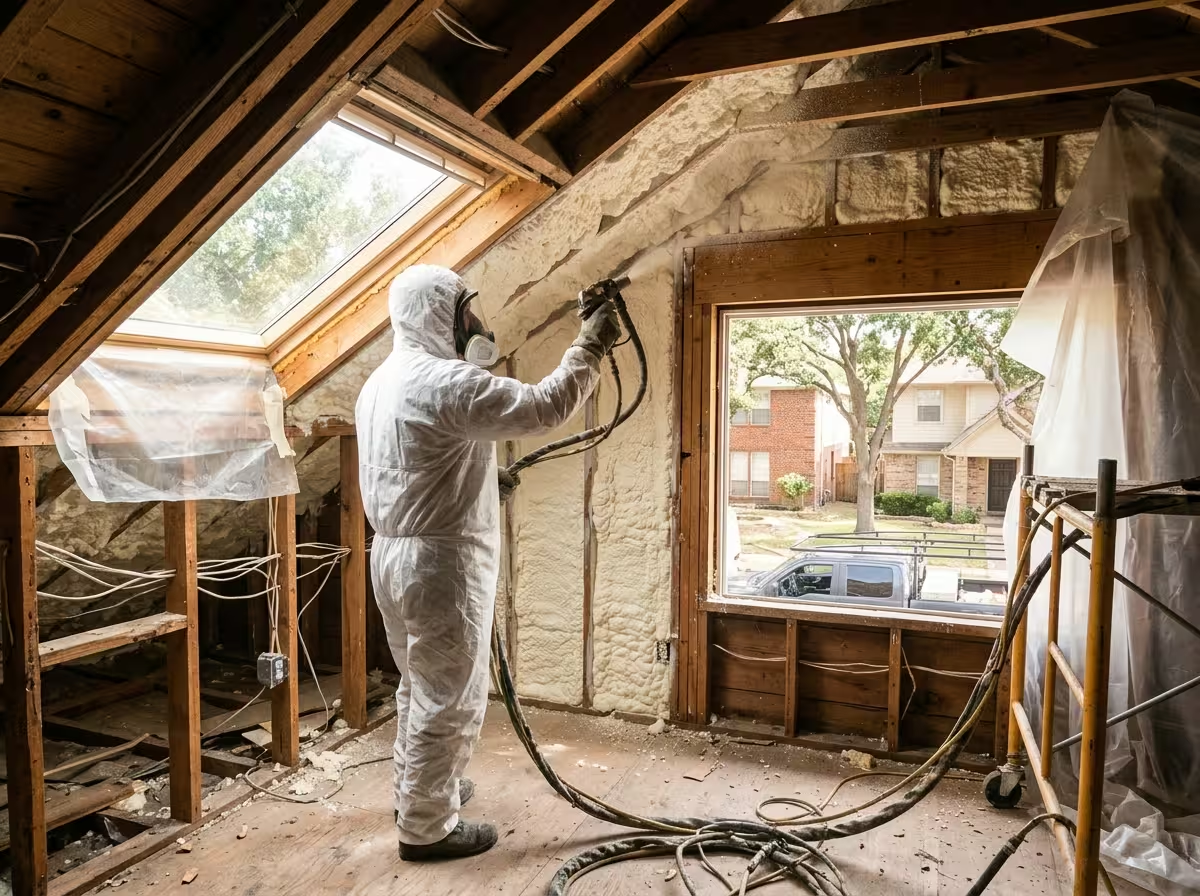
Our Spray Foam Insulation Services in East Dallas
- Assembly assessment. The proposed area is reviewed alongside moisture behavior and existing construction.
- Product choice. Foam type and application depth follow the reviewed building assembly.
- Attic and roofline areas. Access, ventilation design and nearby equipment are considered before spraying.
- Wall cavities. Open wall areas are included where the project design calls for spray foam.
- Underfloor areas. Raised-floor work begins with an assessment of access and moisture.
- Protection and occupancy. Masking, restricted areas and ventilation are established before application.
- Coverage review. Our installers review the application before concealment and provide return-to-use instructions.
Foam type, thickness and protective layers follow the assembly requirements. Existing leaks and moisture problems need correction first.
Spray Foam Insulation Considerations for East Dallas Tudor and Craftsman Homes
Homes in Greenland Hills, Junius Heights, and Lakewood can contain roof framing and wall materials from different renovation periods. A finished attic may sit beside an untouched roof space. These areas need to be understood together. Residential spray foam insulation should follow the actual construction rather than assumptions based on the home’s age.
Checking Roof Sheathing and Existing Materials
Roof leaks and damp sheathing need attention before insulation is applied. Covering affected wood can make later inspection more difficult. The roof deck should be sound and within the foam manufacturer’s moisture limits. Existing repairs also need checking so the insulation does not conceal an unresolved problem.
Older wall assemblies may rely on drying in a particular direction. Adding a material that slows vapor movement can change that behavior. Closed cell spray foam insulation generally restricts vapor movement more than open-cell products at comparable installed thicknesses. Its suitability depends on the complete assembly, not density alone.
Open cell spray foam insulation allows more vapor movement, but that does not make every roof arrangement moisture-safe. Indoor humidity and the layers above the sheathing still matter. The product being used should fit a defined moisture-control plan. Neither foam type replaces the need to repair water entry.
Preserving Interiors During Insulation Work
Spray foam insulation for walls usually requires suitable access to the cavity. Original plaster and trim should not be opened without a clear plan. If a renovation already exposes the framing, that may provide an opportunity for insulation. Closed-wall work requires separate assessment rather than assuming ordinary spray foam can be added through small holes.
Protecting historic features also means defining where the work stops. Wiring and plumbing access should be considered before cavities are covered. Any required repairs or inspections should happen first. This avoids reopening finished surfaces to deal with work that could have been completed earlier.
Insulating East Dallas Attic Conversions Without Trapping Moisture
An attic bedroom or office can have several surfaces separating it from outdoor conditions. Sloped ceilings may meet short knee walls, with unconditioned spaces behind them. Insulation needs to follow a continuous path around the intended living area. A missing connection can leave air moving around otherwise well-insulated sections.
Choosing the Insulation Boundary
One approach keeps the unused attic areas outside the conditioned space. Insulation and air sealing then follow the room’s ceilings and walls. Another approach places the insulation at the roof deck. That changes how the entire attic relates to the home and requires a complete design.
A vented roof arrangement needs its intended airflow path preserved. An unvented roof assembly follows a different moisture and ventilation strategy. Blocking vents while leaving other parts unchanged is not a complete conversion. The roof system and indoor conditions must be assessed together.
Knee-wall areas deserve close attention because gaps can occur beneath or around them. Floor framing can create hidden routes between attic spaces and the living area. The air barrier needs to connect through those transitions. Adding foam to the most visible surface alone may miss the source of discomfort.
Planning Access and Safe Use
Attic spray foam insulation must leave required service access available. Electrical connections and equipment should not be buried indiscriminately. Foam protection requirements also depend on the space and the approved assembly. A finished attic room may need a different protective covering from a limited-access attic.
Installation planning includes keeping occupants away from the affected work area. Ventilation and return-to-use timing must follow the product being used’s instructions and site conditions. Get those arrangements in writing before work starts. A universal promise of same-day reentry is not appropriate.
Our Spray Foam Insulation Process in East Dallas, TX
- Assembly assessment. Our insulation installers review the assembly, moisture conditions and nearby equipment before defining the proposed application areas.
- Materials and protection. Foam type, depth and protection requirements follow the reviewed construction. Existing leaks and unsuitable substrate conditions are identified before spraying.
- Occupancy arrangements. Work-area restrictions, ventilation and product-specific re-entry requirements are established before application. Occupied adjoining areas are considered in that plan.
- Isolation and application. Access is controlled while the foam is applied in line with product requirements. Adjacent surfaces and equipment are protected within the agreed scope.
- Coverage and re-entry review. Our spray foam technicians review coverage before concealment and provide the applicable return-to-use instructions. Remaining protection requirements are explained at handover.
Why Choose Stone Drywall Solutions for Spray Foam Insulation
- Insulation tied to the assembly. Coverage follows the building’s construction and moisture behavior rather than a generic whole-house package.
- Occupancy arranged before spraying. Our team establishes application restrictions and product-specific re-entry guidance in advance.
- Established property-service experience. The project is supported by a bonded and insured local company with over 20 years of broader drywall and finishing experience.
Our Previous Work
Insulation work is less visible in a finished-room photograph than paint or drywall, so project references need a different discussion. Our portfolio can help place your renovation in context, and we can explain the proposed insulated areas alongside it.
Review Your Insulation Options in East Dallas
Contact us or Call at 469-999-8302 with the areas you want insulated and the access available. Our insulation installers review the older construction and drying paths before deciding where insulation belongs.
Interior Painting Questions and Answers
Access inside an older attic and the condition of existing materials can add preparation before foam is applied. Roofline changes and protection around equipment also matter. The estimate ties coverage and depth to the reviewed assembly rather than assuming every attic is equivalent.
Area, access, preparation and application depth affect the installation schedule. Ventilation and re-entry requirements are product-specific and can extend beyond application itself. We establish those restrictions before the space is scheduled for use again.
No. Leaks, later alterations and damaged areas still need attention. Long-term performance depends on correct installation and a sound building assembly. Inspection and equipment access must remain available, and no universal energy-saving percentage is promised.
No. Repair the roof and assess affected materials before insulation work. Foam should not conceal an active leak or be treated as a roofing repair.
No. Occupancy requirements involve more than insulation. Access, structural suitability, and other building requirements need separate review.
East Dallas, TX Services
Transform Your Space with Expert Craftsmanship
Stone Drywall Solutions is your trusted partner for all drywall and painting needs. Contact us today for a free consultation and let us bring your vision to life with quality services you can rely on.