
Exterior Painting in Central Dallas TX
Exterior painting around an occupied building needs a clear plan for both the surfaces and the people using the property. Stone Drywall Solutions provides exterior painting services in Central Dallas for commercial and residential buildings. Our team brings over 20 years of drywall and finishing experience to the work.
Our exterior painters assess access alongside the existing coating. A ground-level storefront and an upper-level facade need different equipment and scheduling. Defining those needs early helps make the estimate useful.
Call 469-999-8302 to discuss exterior painting for your Central Dallas property.
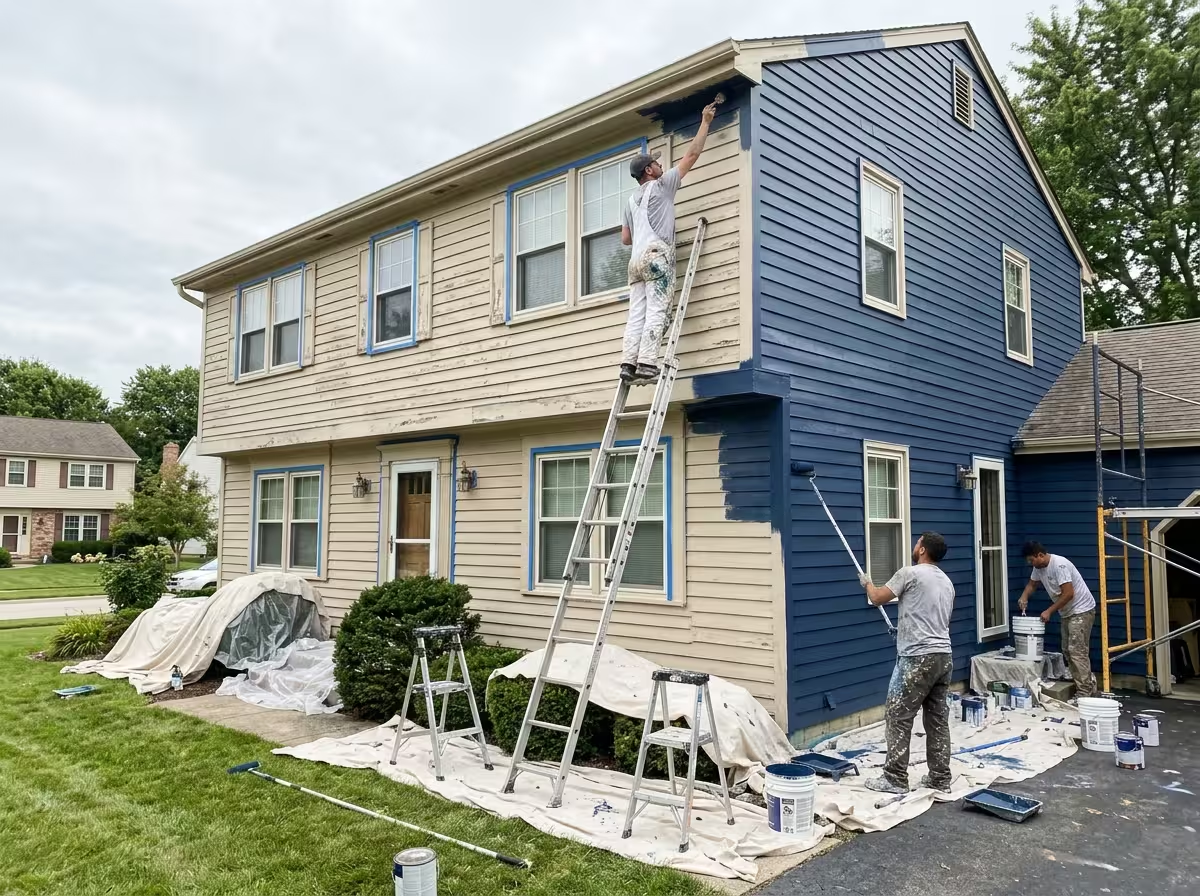
Our Exterior Painting Services in Central Dallas, TX
- Paintable siding. Coating adhesion and surface condition guide preparation before repainting.
- Fascia and soffits. The paint schedule identifies roof-edge surfaces and any repair needs.
- Exterior doors. Door faces and edges receive the coating agreed for the material.
- Window surrounds. Our painters protect glazing and adjoining unpainted surfaces during trim work.
- Porch details. Posts and other exterior features are listed in the painting scope.
- Coating preparation. Cleaning, failed-paint removal and exposed-area priming are defined before application.
- Color samples. Samples are compared with roofing, masonry and other retained materials.
Damaged wood, failing coatings and moisture concerns are assessed before painting. Original masonry is not automatically included.
Exterior Painting for Central Dallas Storefronts, Offices, and Mixed-Use Buildings
Properties around Downtown and Uptown can combine painted storefront frames with stucco or exterior metalwork. Each surface has its own preparation needs. The building’s use matters too. A retail entrance may need daily access throughout the project, while a vacant space can allow a wider work area.
Preparing Storefront Frames and Exterior Metal
A smooth metal frame may look ready for paint while still carrying dirt or a slick factory finish. Cleaning and a compatibility check come first. Some surfaces need a suitable bonding primer. The coating system must suit the metal and the finish already on it.
Rust needs attention before repainting. Loose corrosion should be removed using an appropriate method, followed by compatible preparation and primer. Deep deterioration may call for repair or replacement. Covering rust with finish paint alone does not establish a dependable base.
Hardware and seals need protection during exterior coating application. Paint should not bridge moving parts or block drainage paths. Glass edges also need careful masking. These details take time even when the painted area is small, which is why square footage alone can misrepresent a storefront job.
Assessing Stucco and Larger Wall Surfaces
Stucco exterior painting starts with checking the surface beneath the old finish. Cracks and loose sections require assessment before coating. Recurring cracks or damp areas may indicate a problem that paint cannot resolve. We agree on the repair scope before the wall is prepared.
Elastomeric paint is not an automatic answer for every cracked facade. The system must suit the surface and its moisture conditions. Existing coatings can affect compatibility as well. Product selection should follow the assessment rather than a general promise that a thicker coating fixes everything.
Larger multi-unit properties can add access challenges above entrances and neighboring roofs. Equipment must suit the site and the building’s height. The exterior painting scope should reflect what can be reached safely and what needs separate access arrangements. Those requirements should be settled before work dates are confirmed.
Managing Exterior Painting Around Downtown Dallas Foot Traffic
Busy sidewalks and closely spaced properties leave less room for setup. Commercial exterior painting needs a plan that protects pedestrians while keeping required routes available. The work area should be agreed with the property manager before equipment arrives. Public-space use may also require municipal permission.
Keeping Entrances and Deliveries Organized
Businesses need to know which entrances will be affected and when. A staged plan can allow one section to be prepared while another remains available. Required exits must stay usable. Coordinate the arrangement with building management rather than relying on temporary signs alone.
Deliveries deserve their own time window. Materials and equipment can conflict with loading areas even on a modest painting job. We discuss those routes with the businesses sharing the site. A clear sequence reduces repeated moves and helps avoid placing stock or vehicles beside wet paint.
Adjacent properties need protection too. Wind can carry spray beyond the intended wall. An airless paint sprayer may be unsuitable where containment cannot be maintained. Brush or roller application can offer better control in tight areas, depending on the surface and conditions.
Matching the Schedule to Actual Site Conditions
Early or quieter work periods may help around customer traffic. They still need to fit building rules and suitable painting conditions. Dew or a damp wall can delay coating even when access is clear. The schedule should allow the crew to prepare one area while another becomes ready.
Our painting professionals explain how weather affects the work. Rain timing matters beyond the hour of application because fresh coatings need protection while drying. Product instructions determine that window. A realistic schedule accounts for it instead of treating every dry hour as usable.
Our Exterior Painting Process in Central Dallas, TX
- Exterior assessment. Our exterior painters inspect the existing coating, underlying material and access before identifying preparation and painted boundaries.
- Protection and preparation. Adjacent materials are protected, surfaces are cleaned and failing coatings are addressed. Identified repairs are distinguished from ordinary paint preparation.
- Paint schedule. Colors and surfaces are recorded in the paint schedule after any property-specific approval requirements are established. Samples guide the final color decision.
- Primer and coatings. Primer and finish coats are applied within product limits for weather, surface conditions and drying. A damp base is not treated as ready for painting.
- Completion inspection. Our painting professionals review coverage and edges before protection is removed, then discuss drying and early care with you.
Why Choose Stone Drywall Solutions for Exterior Painting
- Preparation follows the surface. The existing coating and base determine cleaning, removal and priming.
- Painted boundaries made clear. Our exterior painters distinguish trim, siding and doors from masonry or details that will remain untouched.
- Local service with experience. We bring over 20 years of drywall and finishing experience as a bonded and insured, locally owned business.
Our Previous Work
Storefront paint needs to read clearly beside signage, glazing and neighboring businesses. Our previous-work gallery can help you discuss that relationship for a Central Dallas property.
Review Your Exterior Painting Project in Central Dallas
Call our exterior painting team at 469-999-8302 with photos of the surfaces and colors you want to change. Our exterior painters arrange working zones around entrances and the movement of people past the building.
Exterior Painting Questions and Answers
Protecting a shared entrance and staging work around pedestrian traffic adds tasks beyond paint application. Height and existing coating failure also affect labor. The proposal identifies access and preparation before setting the exterior painting price.
Surface preparation, building height, coating stages and suitable weather determine the schedule. We allow for required drying between coats and explain how rain, temperature or damp surfaces can change application dates.
There is no single repainting interval for every elevation. Exposure, surface condition and preparation influence wear. Sunny trim can age differently from a sheltered wall; peeling, open joints and moisture problems need attention before widespread coating failure.
Often it can with suitable separation and a staged plan. Some entrance work may need a temporary change in access. We agree on those arrangements before scheduling.
Yes, when access permits, but the area behind the sign remains untreated. A planned sign move is best resolved before painting. Electrical disconnection or sign work is identified separately rather than assumed to be part of the paint job.
Central Dallas, TX Services
Transform Your Space with Expert Craftsmanship
Stone Drywall Solutions is your trusted partner for all drywall and painting needs. Contact us today for a free consultation and let us bring your vision to life with quality services you can rely on.