
Tape and Mud Drywall in Central Dallas TX
Long walls and strong window light leave little room to hide uneven joints. Stone Drywall Solutions provides drywall tape and mud services in Central Dallas for commercial build-outs and residential renovations. Our team has over 20 years of drywall and finishing experience.
Our drywall finishers plan the finishing around the intended paint or wall covering. Lighting and access also shape the work. Agreeing on those details early gives everyone a clearer standard for the completed surface.
Call 469-999-8302 to discuss drywall taping and mudding for your Central Dallas property.
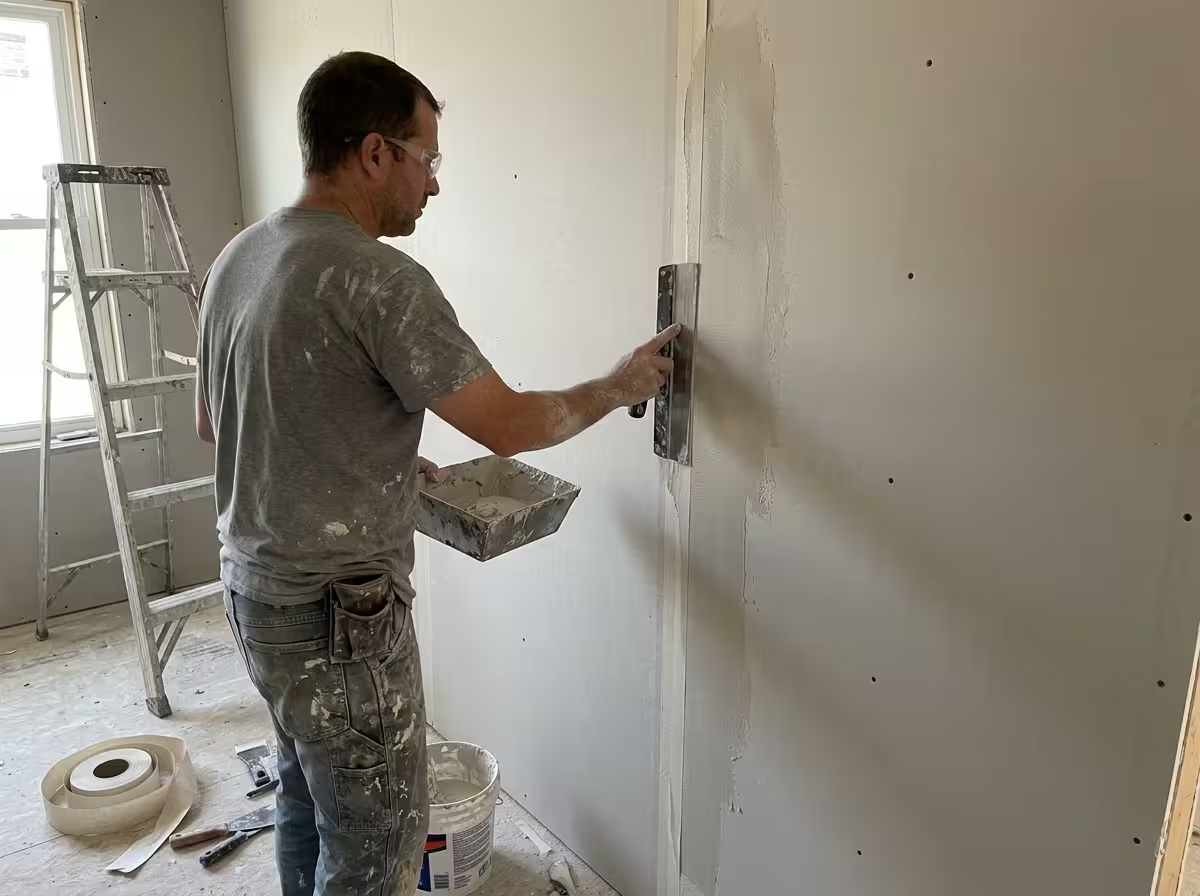
Our Drywall Taping and Mudding Services in Central Dallas, TX
- Seam taping. Joint tape is bedded over aligned, supported board edges.
- Compound coats. Successive coats build a controlled transition across each joint.
- Inside corners. Our finishers establish consistent lines at wall and ceiling connections.
- Outside corners. Edge profiles are reinforced and finished for the intended appearance.
- Fastener treatment. Fastener heads receive finishing within the agreed surface level.
- Replacement-board joints. Old-to-new connections are treated after panel alignment is checked.
- Surface review. Sanding and inspection prepare the finished joints for priming or decoration.
The finish level is agreed before work starts. Joint finishing does not correct movement in an unstable assembly.
Tape and Mud Drywall for Downtown Dallas Offices and Retail Build-Outs
Office renovations and retail tenant improvements in Downtown Dallas often create long new partitions. Reception walls may sit under accent lighting, while conference rooms need a consistent finish across broad surfaces. Drywall taping and mudding should follow the completed partition layout and the planned decoration.
Coordinating Finishing With Other Trades
Electrical openings and other service work should be settled before the final coats begin. Late changes can leave fresh patches across a completed wall. We confirm the sequence with the project team. Required inspections and corrections should happen before the area moves into finishing.
Board installation needs checking too. Proud fasteners or torn face paper can interfere with a sound finish. Loose panels require correction before drywall joint compound application. Compound should not be used to hide an installation defect that could later move or break through.
Commercial walls may also form part of a rated assembly. Joint treatment must follow the project requirements where applicable. A visually smooth surface does not establish that the assembly is complete. We keep those specifications tied to the finishing scope.
Allowing for Coats and Drying Conditions
Drywall mud application builds the finish in stages. The first treatment reinforces the joints, while later coats fill and broaden the transition. The chosen products determine when another coat can follow. Scheduling should reflect those requirements rather than assume every layer can be completed in one visit.
Indoor temperature and humidity affect drying. A closed building without suitable environmental control can slow the process. We confirm workable conditions before setting a painting date. Forcing the schedule forward can leave moisture beneath the next finish.
Material access matters in downtown buildings. Loading arrangements and elevator reservations may affect deliveries. The finishing crew also needs an agreed route for equipment and cleanup. These practical details belong in the schedule before work begins.
Achieving Smooth Drywall Finishes in Central Dallas Condos and Modern Lofts
Condos and loft-style interiors can have large windows beside uninterrupted walls. Light falling across the surface can reveal screw depressions and slight joint ridges. The finish should be selected with that lighting in mind. “Smooth” describes the appearance goal but does not define the full preparation.
Choosing Between Level 4 and Level 5
A Level 4 finish includes completed treatment of joints and fasteners without a full-surface skim coat. It can suit many applications, depending on the decoration and lighting. It should not be treated as a universal choice for every smooth painted wall.
Level 5 adds a skim coat over the prepared surface. This helps create more uniform texture and absorption between the board face and finished joints. It may be appropriate under demanding light or with higher-sheen paint. It does not straighten bowed framing or eliminate every possible shadow.
The choice should follow the final wall covering and paint sheen. Thin coverings or reflective finishes can expose defects that a heavier texture would soften. Share those selections before the quote is finalized. Changing them later may require additional surface work.
Checking the Surface Under Representative Light
Our joint-finishing specialists review walls under the room’s normal lighting and expected daylight conditions. Broad surfaces should be viewed from ordinary positions within the space. The aim is to identify meaningful defects before painting. We agree on those inspection conditions rather than relying on an unlimited promise of invisible joints.
Sanding should remove minor ridges without damaging the board paper or exposing tape. More sanding is not always the answer to a low area. That area may need another controlled coat instead. Final inspection should guide the correction.
Drywall primer remains a separate step before paint. It helps prepare the finished surface for decoration but will not flatten a ridge. The joint work must be ready first. We confirm who handles priming and any follow-up inspection after it.
Our Drywall Taping and Mudding Process in Central Dallas, TX
- Board assessment. Our drywall finishers check panel alignment, support and fastening before planning seam treatment and the intended decorative finish.
- Joint reinforcement. Tape and compatible compound reinforce joints and corners. Weak or moving board is identified before a finishing layer covers the connection.
- Finishing level. Lighting and planned paint establish the finish-level discussion. Any broader surface treatment is identified separately from ordinary joint finishing.
- Compound coats. Successive compound coats form a controlled transition across seams, with the required drying between stages. Raised edges are addressed during finishing.
- Sanding and inspection. Our joint-finishing specialists sand and inspect the surface under representative light, then confirm readiness for the next primer or texture stage.
Why Choose Stone Drywall Solutions for Drywall Taping and Mudding
- Board condition checked first. Joint finishing starts with support and alignment rather than extra compound over an unstable base.
- Decoration considered early. Our drywall finishers use the room’s light and intended paint to establish the surface requirements.
- A local finishing business. More than 20 years of drywall and finishing experience back our bonded and insured company.
Our Previous Work
Broad condo walls and showroom lighting make joint finishing easy to scrutinize. In our previous-work gallery, look at the wall planes and corners relevant to your Central Dallas interior.
Prepare Your Drywall for Decoration in Central Dallas
Call our drywall finishers at 469-999-8302 with details of the installed board, room lighting and planned paint or texture. Our drywall finishers review the required finish under the lighting intended for the office, shop or residence.
Drywall Taping and Mudding Questions and Answers
Long showroom walls and strong side lighting can require a more demanding finish than a back office. Access and the agreed finish level also affect labor. Our proposal records the surface standard before a board-area price is compared.
Joint quantity, finish level and drying between compound coats determine the schedule. Temperature and ventilation also affect readiness for sanding and primer. Our drywall finishers plan the finishing stages without treating a dry surface as proof that every layer is ready.
No. Tape and compound finish a supported joint; they do not stabilize loose board or moving framing. The cause needs attention before finishing. Once the base is sound, correct joint treatment provides a lasting surface for decoration.
Not automatically. The agreed finishing and paint system determines the preparation. A conventional skim coat generally still needs suitable primer before painting.
It is usually better to complete finishing before permanent shelves obstruct the wall. Backing and mounting locations need to be established earlier. Our finishers review access so hidden or narrow areas are not left unfinished.
Central Dallas, TX Services
Transform Your Space with Expert Craftsmanship
Stone Drywall Solutions is your trusted partner for all drywall and painting needs. Contact us today for a free consultation and let us bring your vision to life with quality services you can rely on.