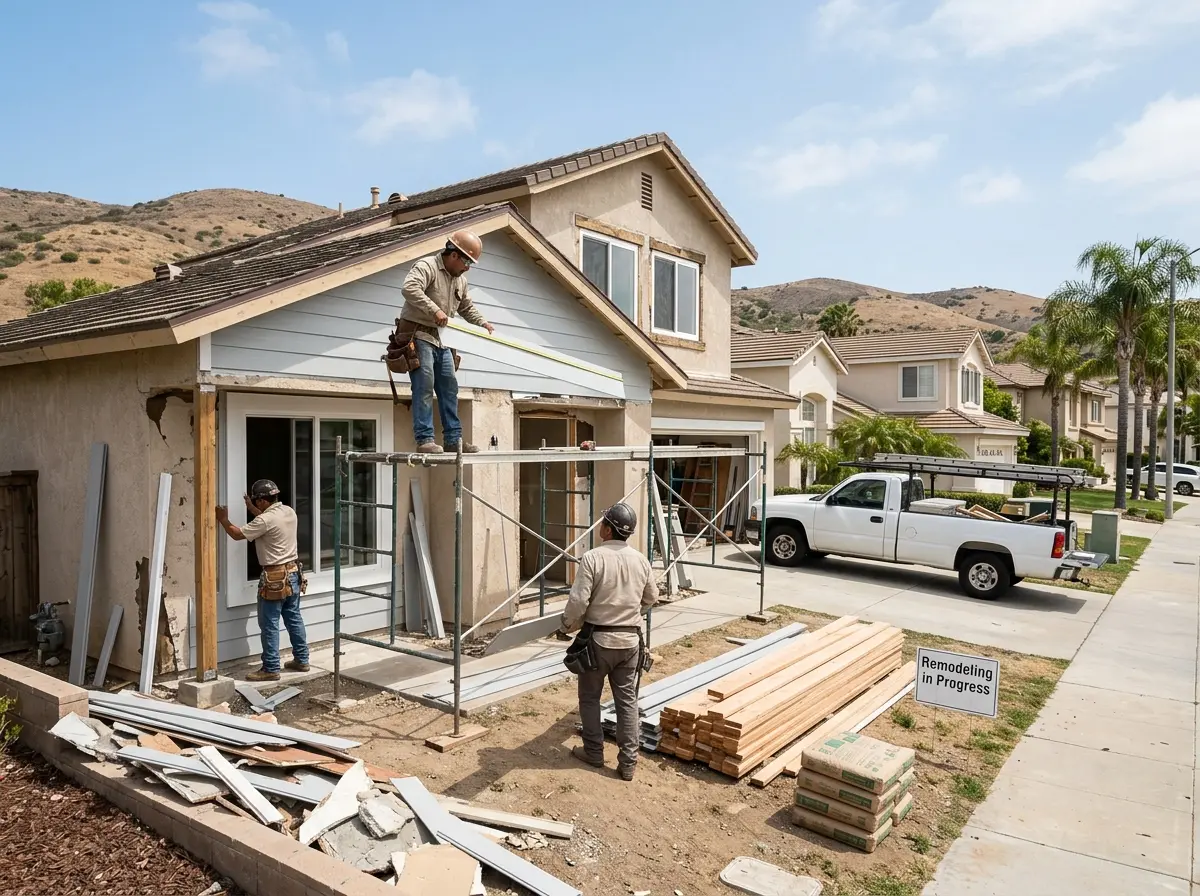
A small crack or hole in drywall may look like a simple cosmetic problem. Sometimes it is. Other times, the visible damage is only a sign of something happening behind the wall or ceiling. Water leaks, movement, impact damage, loose seams, and previous poor repairs can all leave marks that need more than a quick coat of paint.
Professional Drywall Repair Dallas TX homeowners consider should focus on both the damage and its cause. Repairing the surface without understanding why it failed can allow the same crack, stain, or loose patch to return.
This guide explains common drywall problems, how different repairs are handled, when drywall should be replaced, what affects repair cost, and how to compare contractors before hiring someone for your Dallas home.
What Are the Most Common Types of Drywall Damage?
Drywall can be damaged in several ways. The right repair depends on the size, location, and cause of the problem.
Common drywall damage types include:
- Small nail and screw holes
- Furniture or door-handle dents
- Larger wall holes
- Cracks near doors and windows
- Loose or visible drywall tape
- Nail or screw pops
- Water stains
- Soft or swollen drywall
- Damaged ceiling sections
- Poorly finished previous patches
- Texture damage
Small cosmetic damage may only need patching and refinishing. Larger openings or damaged panels may require part of the drywall to be removed and replaced.
Drywall itself is generally made with a gypsum core between facing materials, while joint compound and tape are used to finish joints and repairs. USG lists joint compounds for uses that include taping, finishing, and repairing interior surfaces.
Can Drywall Be Repaired Instead of Replaced?
Yes, many drywall problems can be repaired without replacing the entire wall.
Small holes, dents, surface cracks, and limited damage are often good candidates for repair. The damaged section can be prepared, filled or patched, finished with joint compound, sanded, primed, and then painted.
Replacement becomes more practical when a section is badly broken, soft, heavily damaged by moisture, or no longer provides a solid surface for repair.
The important point is that homeowners do not have to assume an ugly wall needs to be completely replaced.
A drywall repair contractor should first examine the damaged area and determine whether a local repair can create a stable surface. Stone Drywall Solutions provides a dedicated drywall repair service in Dallas for holes, cracks, ceiling damage, and other drywall problems.
How Does Drywall Hole Repair Work?
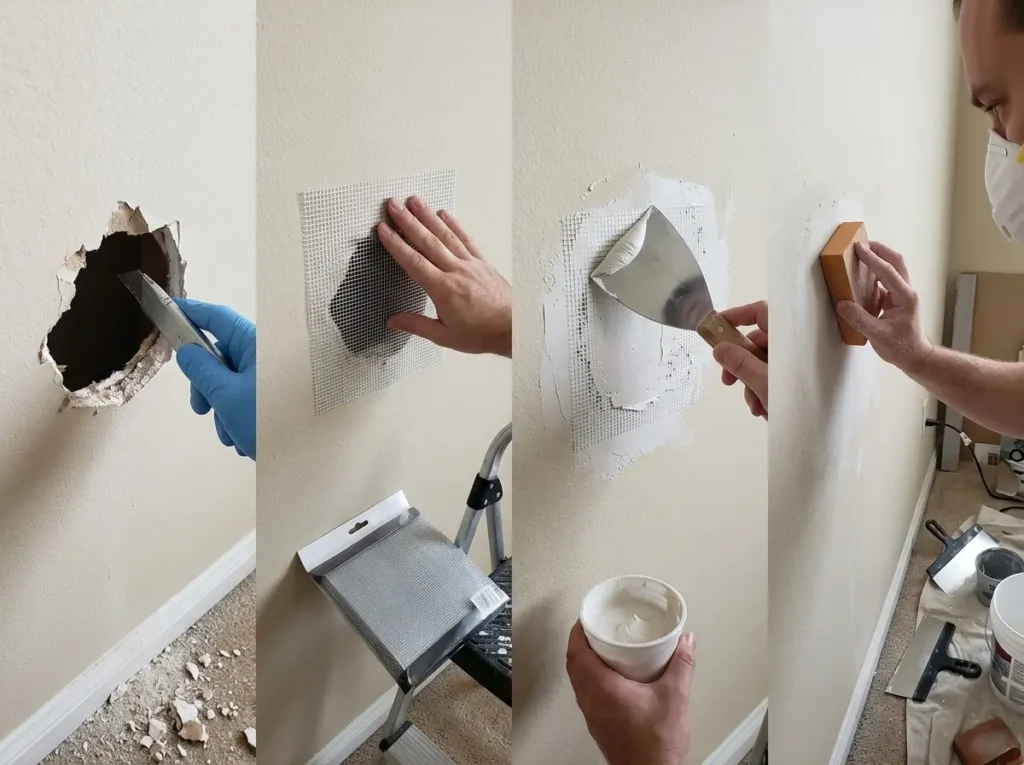
The repair method changes with the size of the hole.
Very small holes may only need filling and finishing. Larger holes often require a drywall patch that is supported properly before joint compound is applied around it.
Good drywall hole repair is not just about filling the opening.
The repaired area must also blend with the surrounding wall. The edges need to be finished smoothly, and any existing wall texture needs to be considered before primer and paint are applied.
A patch that is technically closed but leaves a raised outline can remain easy to see, especially when light falls across the wall.
That is why sanding and finishing matter almost as much as the patch itself.
What Is Drywall Patch Repair?
Drywall patch repair replaces or fills a limited damaged area instead of removing a full wall panel.
The process may involve cutting away loose material, installing a patch, applying tape where required, building up joint compound in thin layers, smoothing the repair, and preparing it for decoration.
USG’s drywall repair guidance also emphasizes drying and sanding the patch before the final finish. Its finishing guidance warns against rough sanding that can damage the drywall face or leave scratches visible after painting. Small details make a noticeable difference.
Too much compound can create a hump. Too little can leave edges visible. Heavy sanding can damage the surrounding surface.
Homeowners considering a DIY patch can also review Stone Drywall Solutions’ guide to common drywall patch repair mistakes before deciding whether the repair is manageable without professional help.
Why Do Drywall Cracks Appear?
Drywall cracks can have several causes, so simply covering the crack is not always the best first step.
Some cracks form where drywall sheets meet. Others appear around doors, windows, ceilings, or previous repairs.
The location and pattern matter.
A small surface crack may involve joint compound or tape. A crack that repeatedly returns may need closer inspection before another cosmetic repair is attempted.
For drywall crack repair, the damaged finish may need to be opened or cleaned, loose material removed, tape repaired where needed, and new compound blended into the surrounding surface.
Homeowners should be especially careful about assuming every crack is “just drywall.” A contractor can repair the drywall surface, but other building problems should be addressed separately if they are causing the repeated movement.
What Should You Do With Water-Damaged Drywall?
First, find and stop the moisture source.
There is little value in repairing water damage drywall while water is still entering the area.
Leaks can leave stains, soften drywall, damage the paper facing, and affect nearby finishes. The amount of material that needs removal depends on the condition of the affected area.
Painting directly over a water stain does not repair damaged drywall.
The wall or ceiling should be inspected after the source of moisture has been corrected. Solid material may need surface preparation, while badly damaged sections may require drywall replacement.
Dallas/Fort Worth has a humid subtropical climate with hot summers, and precipitation can vary widely from year to year. That makes it sensible for local homeowners to take stains or unexplained moisture seriously rather than treating them only as paint problems.
What About Ceiling Drywall Repair?
Ceiling repairs are often more noticeable because overhead surfaces catch light differently and are viewed across a broad area.
Common problems include holes left after plumbing or electrical work, cracks, damaged seams, water stains, and areas opened to reach utilities.
Ceiling drywall repair needs the same basic attention to patching and finishing as wall repair, but working overhead can make the job more difficult.
Texture is also a major concern.
If the surrounding ceiling has an existing pattern, the new repair needs to blend with it. A smooth circular patch inside a textured ceiling can remain obvious even after it has been painted.
For larger or highly visible ceiling damage, professional finishing is often worth considering.
Why Is Drywall Texture Matching So Important?
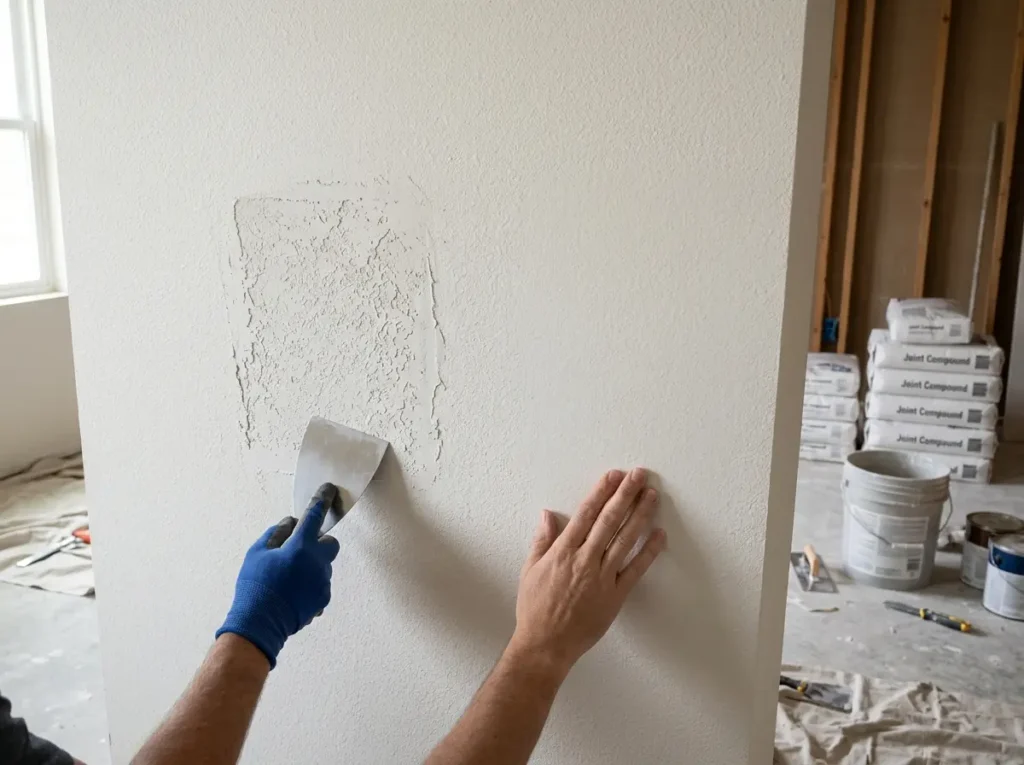
A repair can be structurally fine and still look unfinished when the texture does not match.
Dallas homes may have smooth walls or different applied texture patterns. When part of the drywall is patched, the contractor needs to study the surrounding finish before recreating it.
Drywall texture match involves more than choosing a texture name.
The size of the pattern, thickness, application method, and way it blends outward from the repair can all affect the final appearance.
USG’s own repair guidance describes specific methods for recreating and blending textured repairs, showing why texture work is a separate finishing step rather than an afterthought.
The goal is not to make the repaired spot more textured. It is to make it attract less attention.
Why Do Sanding and Priming Matter?
Patching closes the damage. Finishing hides the repair.
Drywall sanding helps smooth the transition between the joint compound and existing surface. The work needs enough sanding to remove ridges and edges without damaging the surrounding drywall paper.
USG advises removing sanding dust before applying surface treatments and warns that overly coarse sanding can leave marks that remain visible after painting.
Drywall priming is also important after a repair.
New joint compound and the existing painted wall can absorb paint differently. A suitable primer helps prepare the repaired surface for the decorative coat.
Skipping preparation may leave a patch that looks different from the rest of the wall even when the paint color matches.
DIY Repair or Professional Drywall Contractor?
Small cosmetic repairs can be reasonable DIY projects.
A tiny nail hole or shallow dent may not require a contractor. Homeowners comfortable with basic patching, sanding, and painting may be able to handle simple work themselves.
Professional help becomes more useful when:
- The hole is large
- Several areas are damaged
- Drywall tape has failed
- The ceiling is affected
- Water damage is present
- Texture must be matched
- A previous patch looks poor
- Cracks continue to return
- The finished area will be highly visible
A professional repair is especially valuable when you care about how the wall looks after painting.
The patch itself is often only part of the job. Blending it into the surrounding surface takes finishing skill.
What Affects Drywall Repair Cost?
There is no single accurate price for every repair.
Drywall repair cost depends on the condition and scope of the work rather than just the number of holes.
Factors can include:
- Size of the damaged area
- Number of repairs
- Wall versus ceiling location
- Accessibility
- Need for drywall replacement
- Water damage
- Texture matching
- Tape or seam repair
- Surface preparation
- Painting requirements
A small patch and a water-damaged ceiling section are very different projects.
Homeowners should therefore be careful with flat online price estimates that do not consider the actual condition of the wall.
Ask the contractor what is included in the estimate and whether finishing, texture work, priming, cleanup, or painting are part of the proposed scope.
Local Drywall Considerations Around Dallas
Homes throughout Dallas, TX and Dallas County vary in age, construction, previous remodeling, and interior finishes.
That affects drywall repair.
An older home may have several layers of previous repairs or finishes. A newer property may have a texture that needs careful matching. Renovation work can also leave openings where plumbing, wiring, lighting, or other systems have been changed.
Nearby communities can have similar repair needs without every property being identical.
For example, Stone Drywall Solutions also provides drywall repair in Irving, TX, where its repair service includes holes, damaged seams, ceiling openings, and texture work.
The specific wall or ceiling should always guide the repair rather than assuming every local property needs the same approach.
How Do You Choose a Drywall Repair Contractor?
Compare more than the final estimate.
Ask the contractor what they believe caused the damage and how they plan to repair it.
A good conversation should cover:
- Repair versus replacement
- Patch method
- Joint and tape work
- Texture matching
- Sanding and surface preparation
- Priming or painting expectations
- Cleanup
- Project scope
- Estimate details
You should also look for experience with the type of damage you have.
A company that regularly handles cracks, holes, ceilings, textures, and larger repairs may be better prepared for a complex job than someone focused mainly on basic patching.
Stone Drywall Solutions states that it serves residential and commercial projects in the Dallas-Fort Worth area and offers drywall installation, repair, patching, taping, mudding, and texturing services.
What Should You Ask Before Approving the Repair?
A homeowner should understand what will happen before work starts.
Ask:
- What caused the damage?
- Will you patch or replace the drywall?
- Does damaged tape need replacement?
- Will the existing texture be matched?
- Is painting included?
- What areas need protection during sanding?
- How will dust and debris be cleaned?
- Could additional damage become visible once work begins?
Clear answers make estimates easier to compare.
They also reduce the chance that you expect a fully painted wall while the contractor has only priced the drywall portion of the project.
Frequently Asked Questions
Can a drywall hole be repaired without replacing the wall?
Yes. Many holes can be patched without replacing the entire wall. Larger or badly damaged areas may require a section of drywall to be cut out and replaced.
Why does my drywall crack keep coming back?
A returning crack may mean the surface repair did not address the failed joint or movement behind it. The cause should be reviewed before repeatedly adding compound.
Can you repair water-damaged drywall?
Some limited damage may be repairable after the water source is corrected. Soft, badly deteriorated, or heavily damaged sections may need replacement.
Can repaired drywall be made invisible?
A well-finished repair can blend closely with the surrounding surface. Patch finishing, sanding, texture matching, priming, paint, and lighting all affect how noticeable it remains.
Should drywall be primed after patching?
New joint compound should be prepared properly before the finish coat. Primer helps create a more even surface for painting.
When should I hire a drywall contractor?
Consider professional help for larger holes, ceilings, water damage, repeated cracks, failed tape, extensive damage, or repairs where texture and finish quality matter.
Get the Repair Right Before Repainting
Good Drywall Repair Dallas TX homeowners can rely on is about more than covering a crack or filling a hole.
The repair should match the type of damage. Loose material needs to be addressed. Water sources should be corrected first. Patches need proper finishing, and visible areas may require careful texture matching, sanding, and priming before paint goes on.
When comparing a drywall repair contractor, ask what the repair includes and why they recommend that approach.
If you have wall or ceiling damage in Dallas, TX, you can request an estimate from Stone Drywall Solutions and discuss the condition of the area before deciding on the next step.
The best repair is not simply the fastest patch. It is one that solves the visible problem and leaves the surface ready to look like part of the room again.