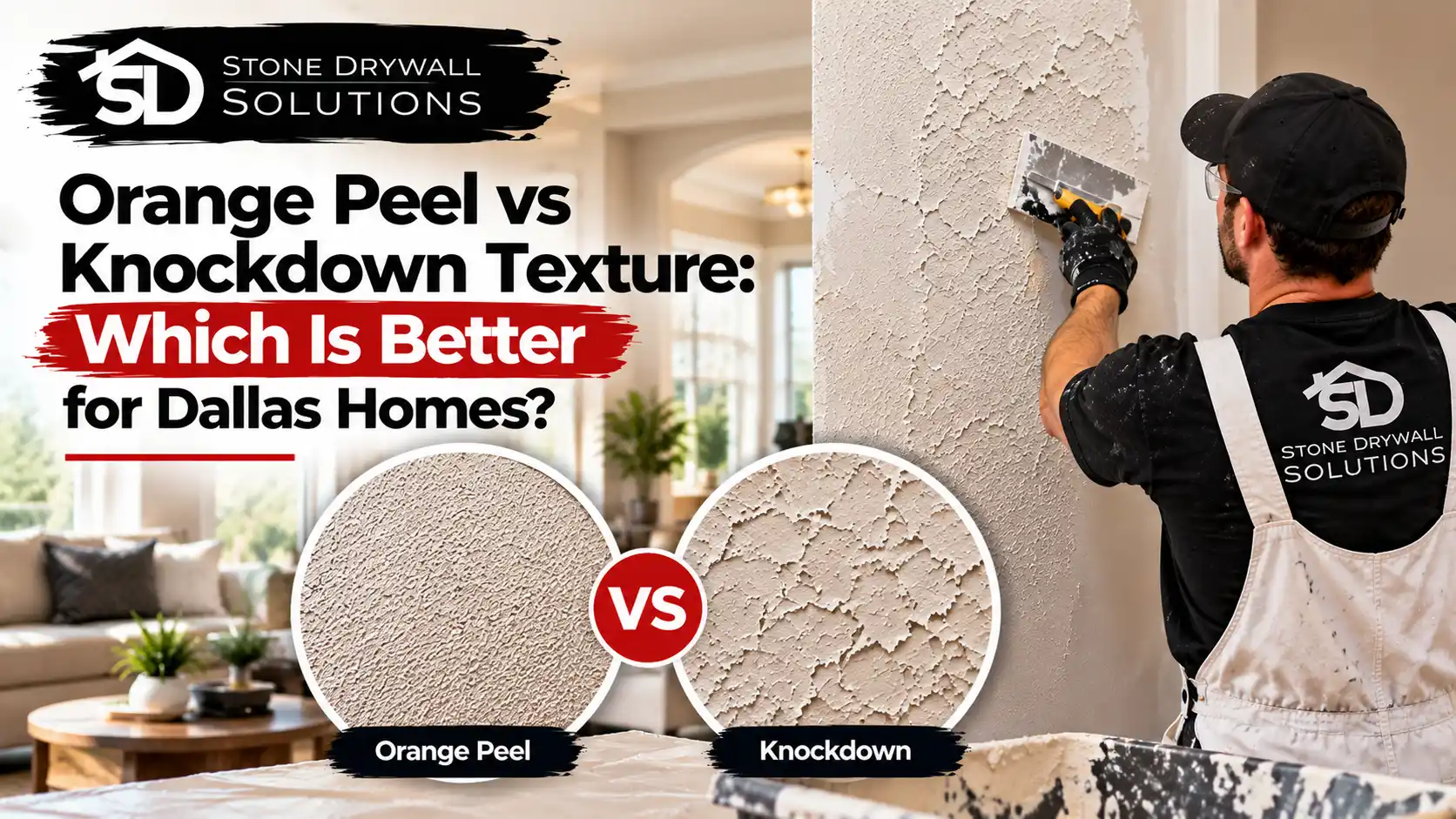
Ask a drywall finisher which texture is best, and the answer is usually another question: best for what? Orange peel vs knockdown texture is the most common choice homeowners face, because both are sprayed, both work on walls and ceilings, and both are widely used. They look different, behave differently when repaired, and suit different rooms, which is why the right pick depends on the home rather than on a universal winner.
This guide compares the two on appearance, application, flaw-hiding, cleaning, repairs, painting, and cost, then explains how to choose for a Dallas home.
What Orange Peel Texture Looks Like
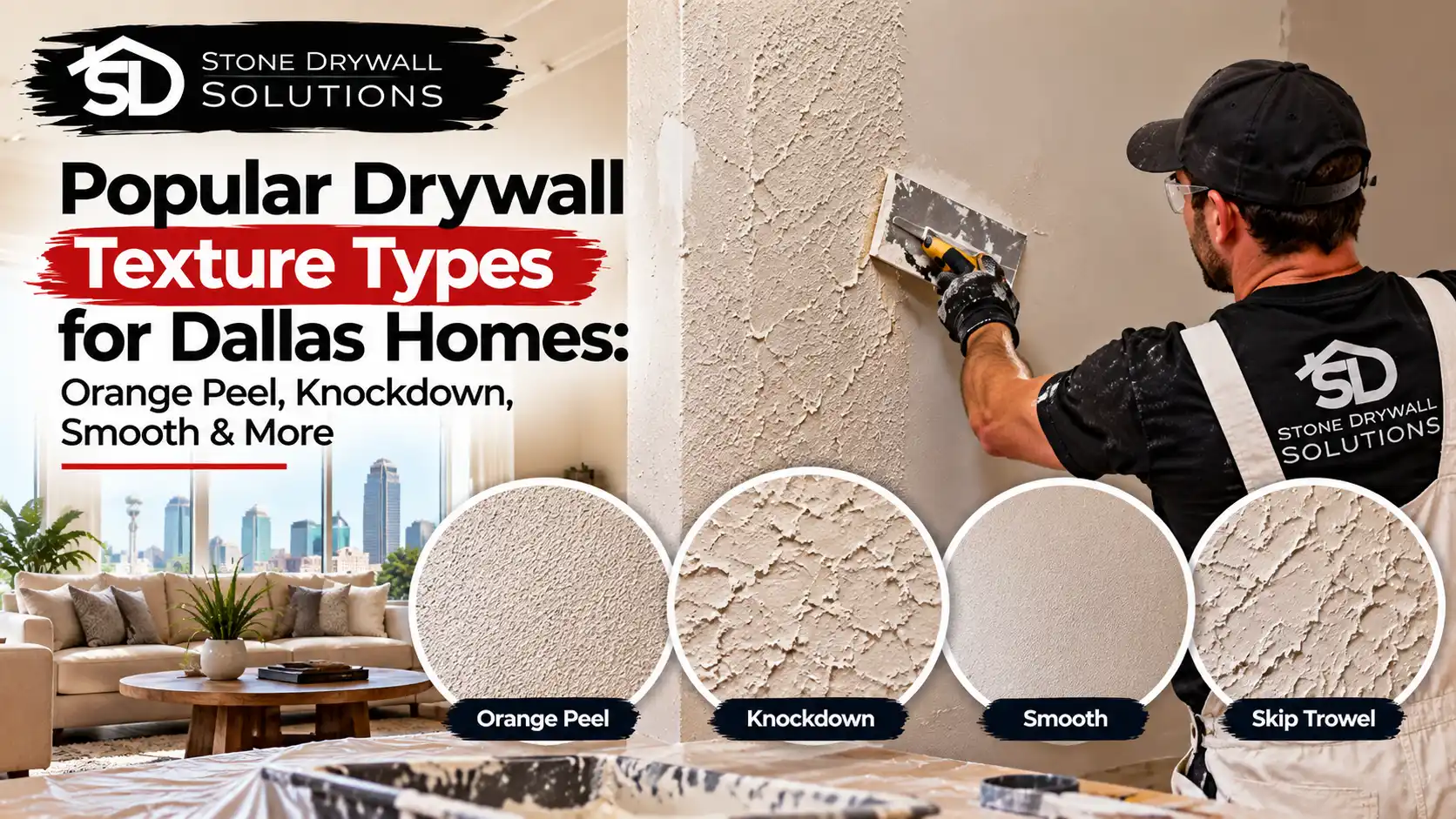
Orange peel wall texture is a spatter pattern of small, gentle bumps and dimples that resembles the skin of an orange. It is made by spraying a thin mix of drywall mud and water onto the wall, sometimes followed by a roller, and it comes in fine, medium, and heavy versions. The result is an even, consistent surface with light depth. It is among the most popular finishes, particularly in newer homes, and a common choice when a smooth wall isn’t wanted.
What Knockdown Texture Looks Like
Knockdown wall texture begins like orange peel, with compound sprayed, stomped, or brushed on, but it adds a step. While the compound is still soft, a wide knife is dragged lightly across it, flattening the peaks into plateaus separated by low ridges. The result is a mottled, random pattern with a more rustic, old-world feel. The look varies with how thick the compound is and how it was first applied, so knockdown ranges from soft and subtle to bold.
How the Two Are Applied
The methods share a starting point and part ways at the finish.
- Orange peel: The compound is sprayed in sweeping passes and left as it lands. The size of the pattern is set by the nozzle, pressure, and distance. Once sprayed, it is done.
- Knockdown: The compound is sprayed in a similar spatter, then flattened with a knife once it has set enough to hold its shape. Timing matters: flatten too early and the texture smears, too late and it won’t flatten.
Both are spray textures and both go on quickly compared with hand-applied finishes such as skip trowel. Orange peel is the simpler of the two because it has no flattening step. Knockdown takes more skill in timing and technique, which is why it is a little slower and sometimes costs a bit more.
Orange Peel vs Knockdown: Side-by-Side Comparison
| Factor | Orange peel | Knockdown |
| Look | Fine to heavy dimples and small bumps | Flattened, mottled plateaus with low ridges |
| Depth | Light to medium | Medium |
| Application | Sprayed, sometimes rolled | Sprayed, then flattened with a knife |
| Flaw-hiding | Low to moderate | Moderate to high |
| Cleaning | Easy under washable paint | Varies with depth |
| Repair and matching | Easier | More demanding |
| Style | Modern to traditional | Rustic, Mediterranean, Southwestern |
Which Hides Wall Imperfections Better?
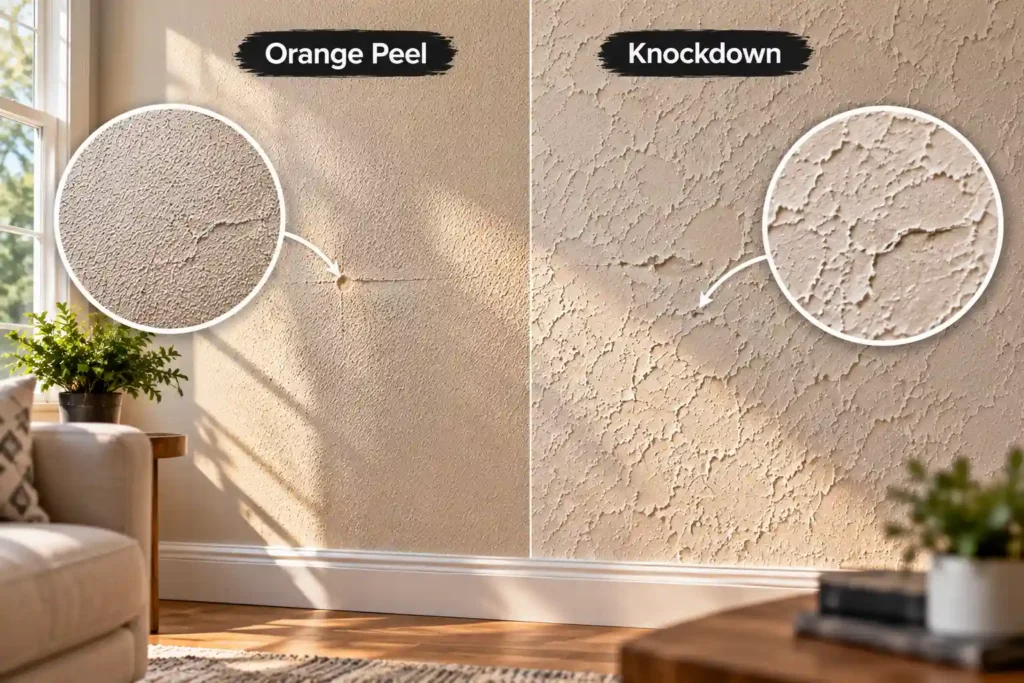
Both hide minor flaws such as faint seam lines and small fastener marks, but they do it to different degrees. Knockdown is generally better at hiding imperfections because its broad, irregular pattern breaks up light across a larger scale. Orange peel’s smaller, more uniform pattern hides minor flaws well but shows more under strong side light on a badly finished wall.
Neither one repairs a poorly finished wall. Cracks, holes, and failed seams have to be fixed before any texture goes on, since texture covers a surface without correcting it. Surface preparation matters more than the texture type.
Which Is Easier to Clean?
Lighter, finer textures wipe down more easily, and orange peel is a good example, especially under washable paint. That suits hallways, kitchens, kids’ rooms, and other high-traffic areas. Heavier, deeper textures catch more dust and scuffs, which applies to bolder versions of either finish. A fine knockdown with shallow ridges cleans reasonably well, while a heavy knockdown with deep ridges collects more dust.
Which Is Easier to Repair and Match?
Repairs are where the two diverge most. Orange peel is the easier texture to match, because it is a spatter with no flattening step. Choosing the right size, spraying in light passes, and blending beyond the patch is often enough.
Knockdown is harder to match because two things have to line up: the spatter and the flattening. The timing of the knife, the pressure, and the thickness of the compound all affect the look, and a mismatch shows as either a smear or a leftover orange-peel patch on a knockdown wall. Matching either texture depends on identifying the size and density of the original, practicing on a test surface, and blending the pattern several inches past the repair. A professional drywall texturing service in Dallas handles the identification, application, and blending as part of the repair.
Durability and Long-Term Wear
Both finishes are durable when they are applied over a properly prepared surface and covered with primer and paint. Texture is a finish layer, so most long-term problems come from what is underneath: cracks that reopen, moisture that softens the board, or seams that were never finished well. Neither texture fixes those problems or causes them.
Day-to-day wear differs mostly with depth. Shallower finishes resist scuffs and wipe clean, while deeper ridges collect dust and show scrapes. In either case, a patch from a future repair is the weak point, because a poorly matched repair stands out far more than normal wear does.
Walls vs Ceilings
Both work on walls and ceilings. In practice, orange peel is common on walls in newer homes and is also used on ceilings, where a fine version keeps the surface quiet. Knockdown is common on both and is a frequent choice for ceilings, where its broader pattern helps disguise flaws under side light. Many homes use one texture throughout, which keeps the look consistent and makes later repairs simpler to blend.
How Each Looks With Paint
Texture changes how paint behaves, and the sheen affects how much the pattern shows. Flatter paints soften a texture and hide imperfections. Glossier paints highlight every peak and ridge, which makes both textures look more pronounced. Texture is porous, so a primer helps it absorb paint evenly and prevents patchy sheen. For help choosing, this guide to the best paint finish for drywall in Texas is a useful companion.
Style: Modern, Traditional, or Rustic?
- Modern interiors often suit a fine orange peel, which reads as quiet and even.
- Traditional homes suit either, with a gentle orange peel or a soft knockdown.
- Rustic, Mediterranean, and Southwestern homes suit knockdown, which has a more hand-finished character and pairs well with exposed beams and terra cotta tile.
Style is a guide rather than a rule. The condition of the walls, the lighting, and the existing finish in the rest of the house often decide the choice.
Cost Comparison
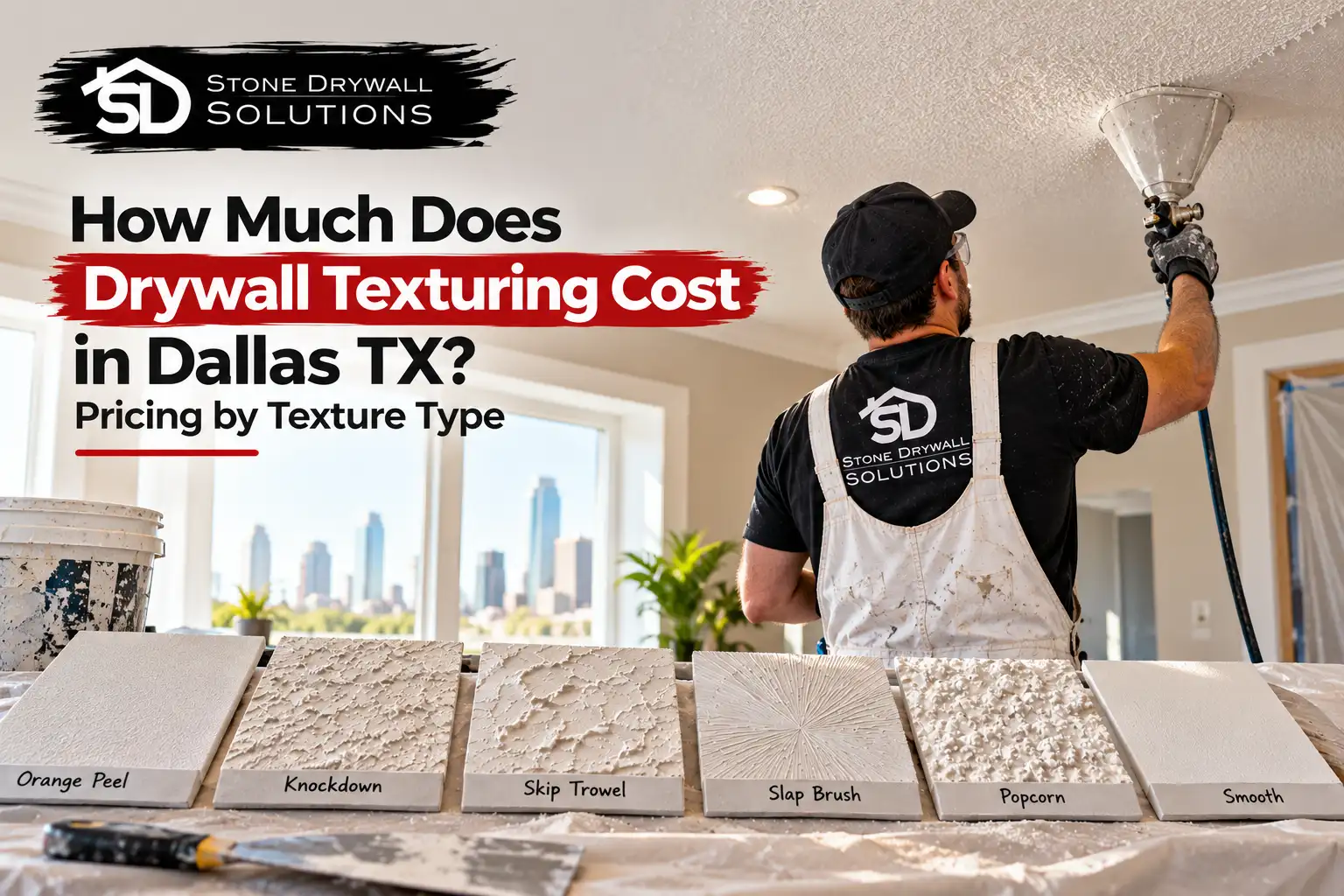
Both are sprayed textures, so their costs are close. Sprayed texture generally runs about $0.80 to $1.50 per square foot, and orange peel is commonly estimated at about $1.25 to $1.95 per square foot. Knockdown on ceilings is often estimated up to about $2.50 per square foot. Knockdown adds a finishing step, which can add a little time to a job.
Note: These figures are general estimates, not confirmed prices. The final cost depends on the texture, application method, square footage, wall or ceiling height, surface condition, repairs needed, and painting. A written, itemized quote after measurement is the only reliable number.
Which Is Better for Dallas Homes?
Neither is better in every case. The practical answer is a set of situations:
- Choose orange peel when a clean, even look is the goal, the room sees heavy use, or future repairs should be simple to match.
- Choose knockdown when the walls have minor flaws to disguise, the style is rustic or Mediterranean, or the ceiling is lit by strong side light.
- Match what is already there when repairing or adding to an existing house, since consistency matters more than preference.
- Consider the lighting. Rooms with large windows reveal flaws, which favors knockdown over a fine orange peel on a wall that isn’t perfectly finished.
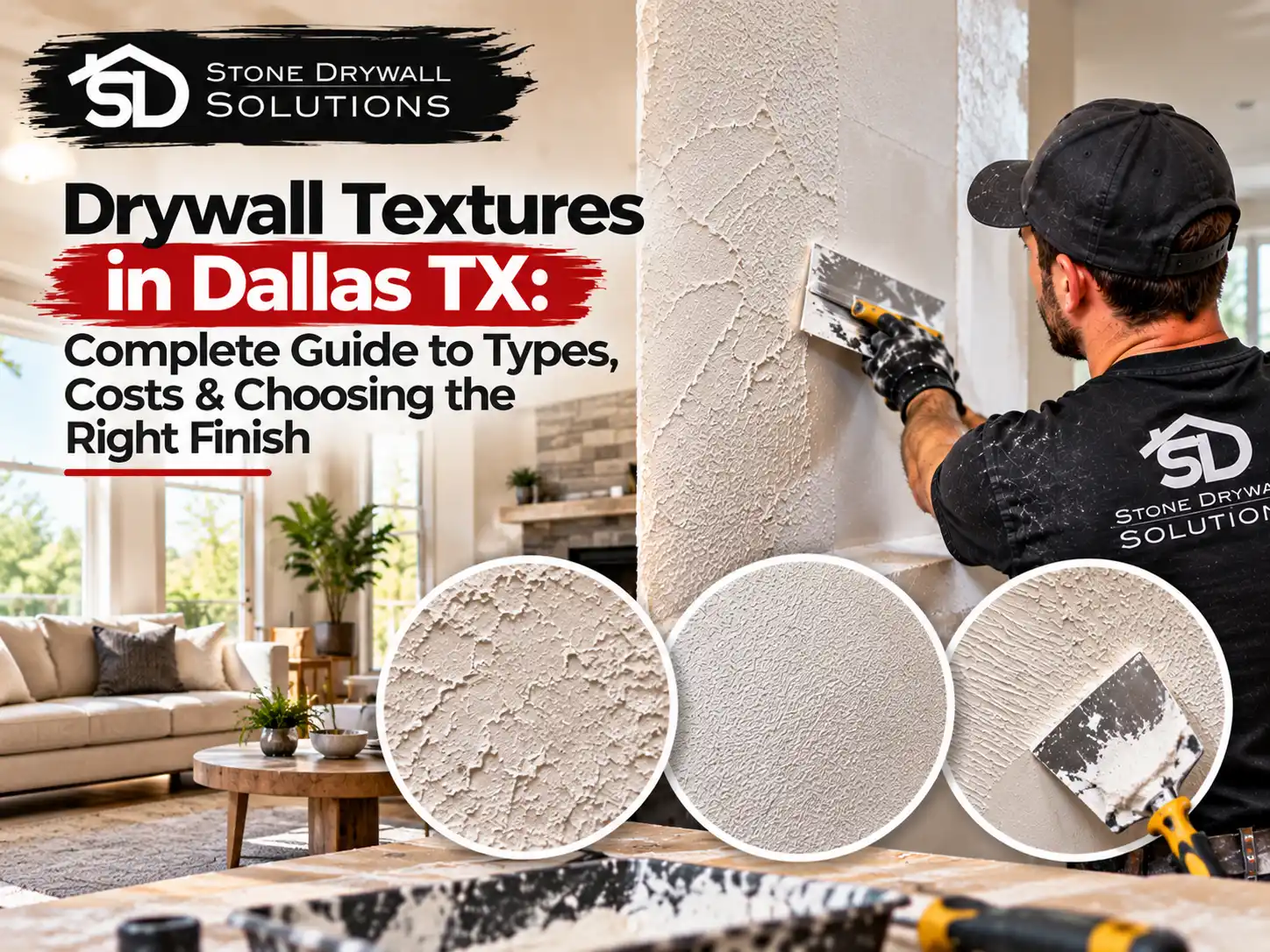
Dallas and Dallas County homes span many decades, so the best match is often whatever the house already has. The complete guide to drywall textures in Dallas compares these two with the other common finishes, including skip trowel, smooth, and slap brush.
Choosing a Texturing Contractor
Ask which textures are offered, whether samples or past work can be shown, how the existing texture will be matched, and how the surface is prepared. Stone Drywall Solutions serves residential and commercial projects across the Dallas-Fort Worth area, and lists knockdown, orange peel, smooth, and slap brush finishes among its texturing options.
Questions Homeowners Ask About Orange Peel and Knockdown
Is knockdown or orange peel more popular?
Both are widely used. Orange peel is especially common in newer homes, and knockdown is common across many home styles.
Which texture hides imperfections better?
Knockdown generally hides more, because its pattern is broader and more irregular. Neither replaces proper surface preparation.
Can I change from one texture to the other?
Yes. Texture can be scraped, skim coated, or covered, but changing it adds preparation steps and cost, so it is worth having the surface assessed first.
Does either texture last longer?
Both last well when applied over a properly prepared surface and painted. Cracks, moisture, and poor repairs cause most problems, not the texture type.
Which is easier to repair?
Orange peel, because it has no flattening step. Knockdown takes more skill to match.
Pick the Finish That Fits the Home
The right finish balances look, wall condition, and the way a house is lived in. For a Dallas home or business that needs a new texture or a match to an existing one, Contact Stone Drywall Solutions or call (469) 999-8302 to talk through the options.