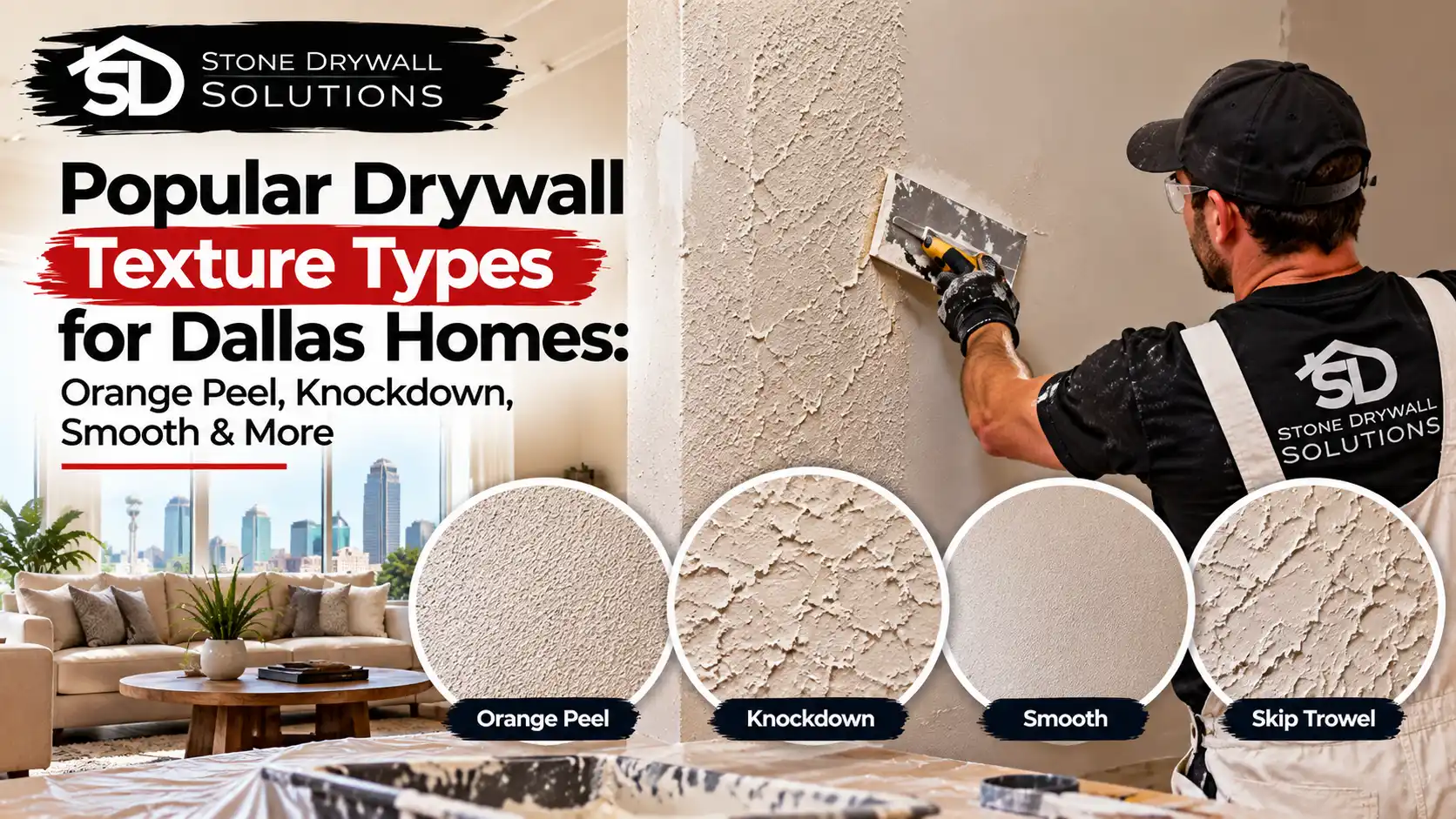
Every wall has a surface, and the surface sets the tone of a room before anyone notices the paint color. A fine, even stipple reads as clean and modern. A flattened, mottled pattern reads as rustic. A glassy smooth wall reads as crisp, and also shows every flaw. The right drywall texture type depends on the style of the home, the lighting in the room, and the condition of the walls underneath.
This guide walks through the most popular drywall texture types for Dallas homes, what each one looks like, how it is applied, where it works best, and how to match a texture to a room.
What Drywall Texture Is and What It Does
Once drywall seams are taped and covered with joint compound, the surface still shows faint ridges and fastener marks. Texture is a layer of compound, sometimes mixed with additives such as sand, applied over the prepared surface to create a pattern and soften those flaws. A smooth finish skips the pattern and relies on an exceptionally even surface instead.
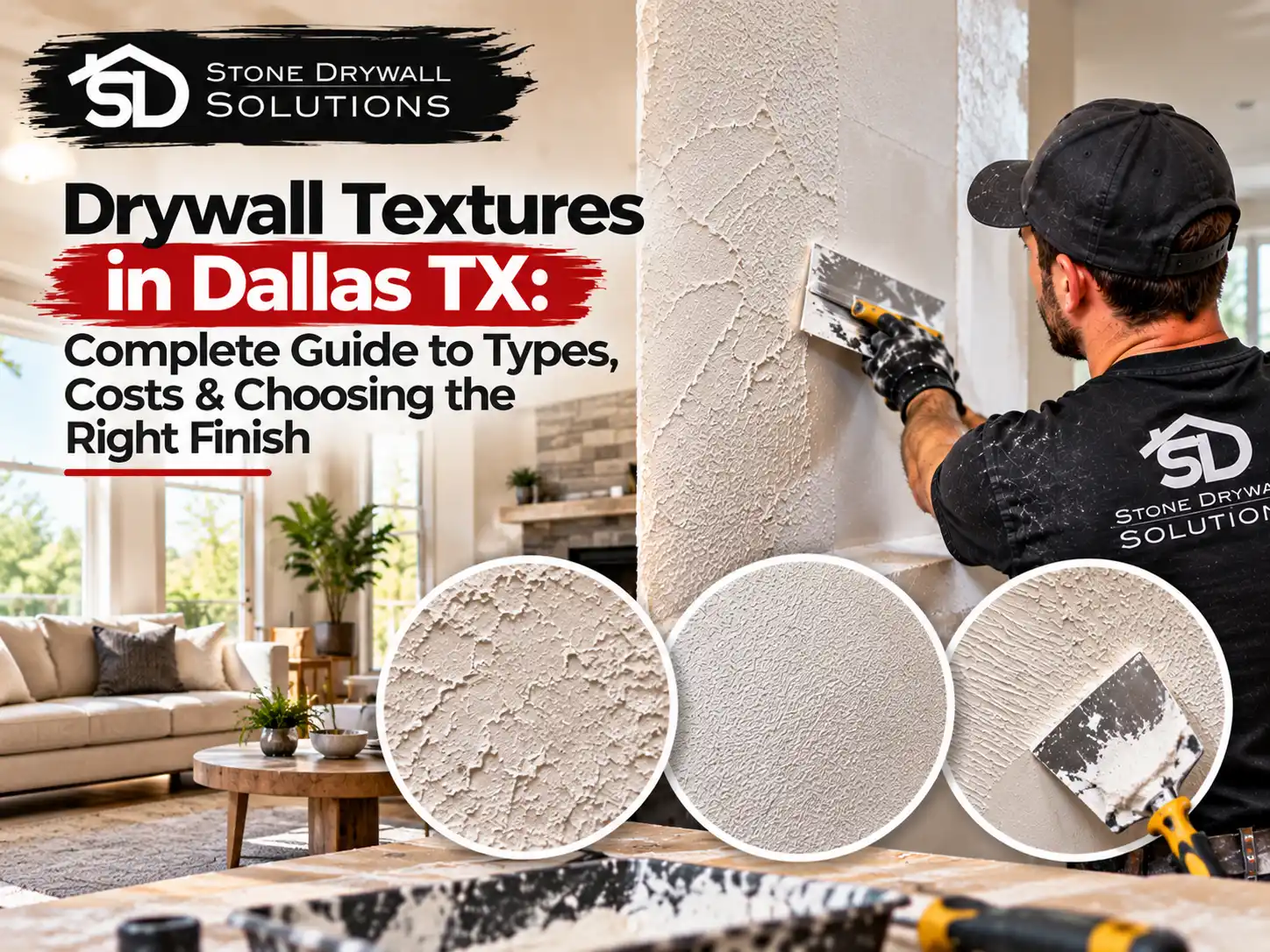
Texture changes how a room looks, how light falls on the walls, how much surface imperfection shows, and how easy the surface is to clean. The complete guide to drywall textures in Dallas covers the full picture, including preparation and costs, while this article focuses on the types themselves.
Popular Drywall Texture Types
Orange Peel Texture
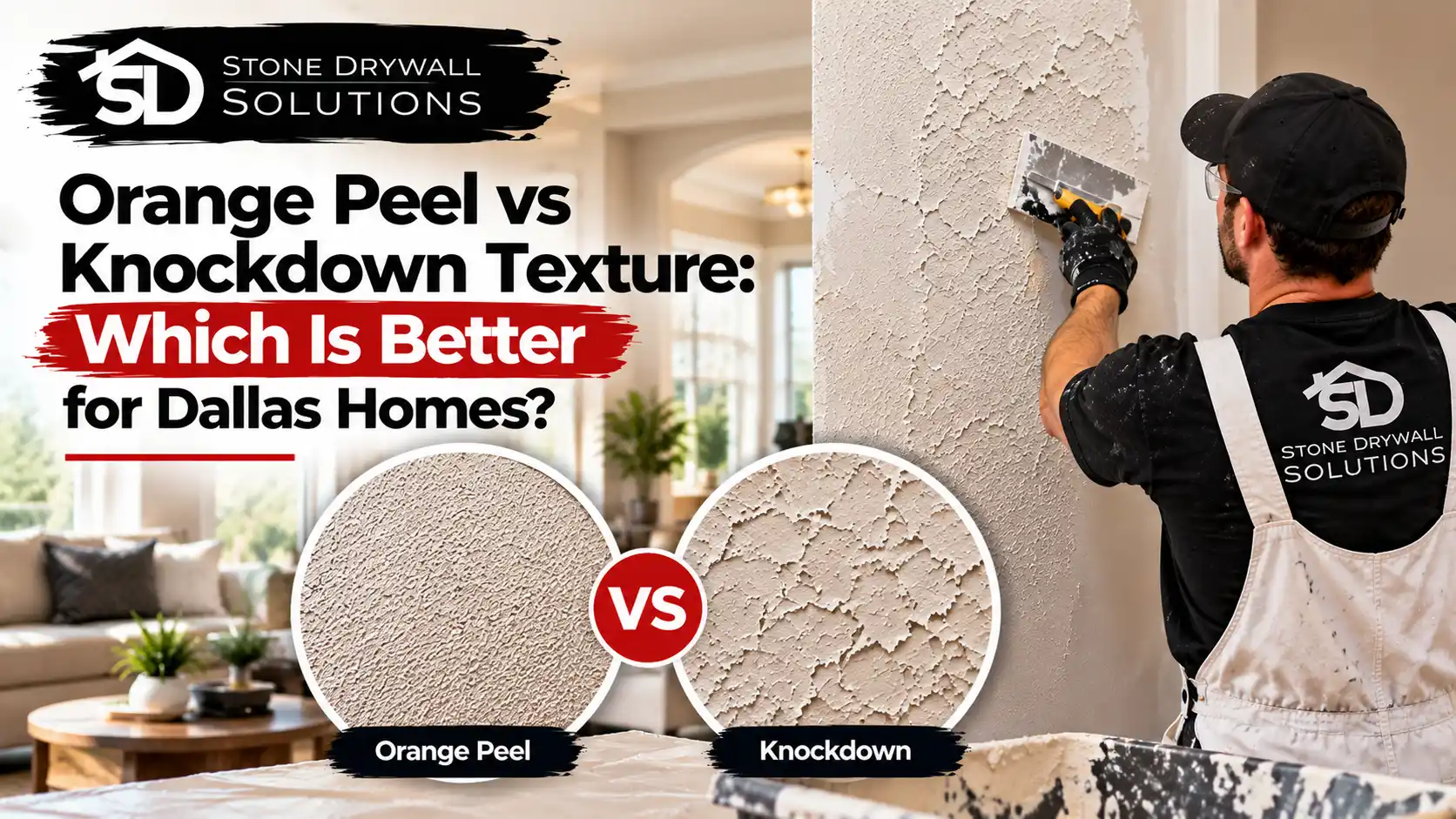
Orange peel texture is a spatter pattern of small, gentle bumps that resembles citrus rind. It is sprayed on, sometimes followed by a roller, and comes in fine, medium, and heavy versions. It is among the most popular finishes, particularly in newer homes, and it is a common choice when a smooth wall isn’t wanted. A fine orange peel under washable paint holds up well to cleaning, which suits busy rooms. Getting an even pattern takes practice, so it is usually left to professionals.
Knockdown Texture
Knockdown drywall texture starts with compound sprayed, stomped, or brushed on, then flattened with a wide knife while it is still wet. The result is a random, mottled pattern with flat plateaus and low ridges. The look varies with how thick the compound is and how it was first applied, and it works on walls and ceilings. Knockdown generally hides flaws more than orange peel, because the pattern is broader and more irregular. It is also one of the textures Stone Drywall Solutions lists among its texturing services.
Skip Trowel Texture
Skip trowel texture is a hand-applied finish made by spreading a thin layer of compound and shaping it with a trowel so that raised patches sit between bare gaps. It ranges from subtle to pronounced, and it gives a rustic, hand-finished appearance often associated with Spanish and Mediterranean styles. It hides imperfections well, but it is harder to do than a sprayed finish, and it usually costs more because of the time involved.
Smooth Wall Finish
A smooth wall finish has no pattern. It is achieved by applying a thin layer of compound across the whole surface and smoothing it, so the wall looks flat and even. That makes smooth walls easy to paint and a natural fit for modern interiors, but it is also the least forgiving type. Side light from windows exaggerates bumps and ripples, and glossy paint reveals every joint and fastener.
Smooth work is described in finish levels. The highest, Level 5, adds a skim coat over the entire surface, and Gypsum Association guidance cited for it points to smooth walls with sheen or gloss paint, dark colors, or demanding lighting. Light textures and flat paint can use a lower level.
Slap Brush and Stomp Brush
A slap brush finish, also called stomp brush or crow’s foot, is made by rolling a layer of compound on and slapping it with a stiff-bristled brush. The overlapping slaps leave sunburst or petal-like patterns. It hides a lot, and it is mostly used on ceilings. It is messier to apply, and it is another of the finishes Stone Drywall Solutions lists.
Popcorn Texture
Popcorn texture is a heavy, bumpy, sprayed finish, available in large, medium, or small sizes. It is closely associated with homes from the 1960s and 1970s and appears almost exclusively on ceilings. It hides ceiling flaws and dampens sound, but it collects dust and is hard to clean or repair neatly. Older popcorn ceilings may contain asbestos, so testing by a professional is advised before disturbing one.
Spray Sand and Sand Swirl
Spray sand looks like wet sand and is a little rougher than orange peel. It is made by mixing sand with water and primer and spraying the mixture on, and it works on walls or ceilings. Sand swirl uses a similar mix applied with a brush in swirling arcs. Both are durable, and both add a subtle grain rather than a pronounced pattern.
Santa Fe, Comb, and Lace Finishes
A handful of hand-applied finishes are more decorative:
- Santa Fe has smooth islands in a rougher base, built from two hand-troweled coats, and suits Southwest-style walls.
- Comb is dragged with a toothed trowel to create arcs, fans, or straight lines, and suits accent walls and ceilings.
- Lace, sometimes called Spanish lace, is carved into wet compound in a layered, lace-like design and is known for hiding cracks and dings.
These finishes are specialty work, and a contractor should show samples before any is applied.
Wall Textures vs Ceiling Textures
Walls and ceilings don’t have to share a texture. Ceilings are lit from the side by windows and lamps, so flaws show more readily, which is why heavier textures are common overhead. Popcorn, slap brush, knockdown, and comb finishes all appear on ceilings. Walls more often use orange peel, knockdown, skip trowel, or smooth finishes.
Some homes use a lighter texture on walls with a heavier one on the ceiling. Others carry a single texture throughout for a consistent look, which also makes later repairs easier to blend.
Subtle vs Heavy Texture
Texture depth is as important as texture type. Light textures show a gentle pattern, are easier to clean, and give a modern, quiet look. Heavy textures have taller peaks and deeper valleys, hide more imperfections, and add character, but they catch more dust and scuffs.
Lighting changes the effect. Raking light from large windows or long hallways exaggerates every bump, which makes a heavy texture more visible but also hides underlying flaws better than a smooth wall would. In hallways, kitchens, and kids’ rooms, a lighter texture with washable paint is generally the easier choice to live with.
Matching Texture to Interior Style
- Modern interiors tend to suit smooth walls, fine orange peel, or very subtle sand finishes.
- Traditional homes often suit orange peel or a gentle knockdown.
- Rustic, Mediterranean, and Southwestern styles suit skip trowel, Santa Fe, and heavier knockdown finishes.
- Cabins and lodge-style rooms can use organic patterns such as tree bark.
Style is a guide rather than a rule, and the condition of the walls often decides the final choice.
Texture by Room
- Living room: A medium orange peel or knockdown suits large rooms where light varies through the day.
- Bedroom: Subtle textures or smooth finishes suit quiet rooms, with the lighting kept in mind.
- Kitchens and hallways: Lighter textures with washable paint are easier to wipe down.
- Ceilings: Knockdown, slap brush, or a light orange peel hides flaws without drawing attention.
How Paint and Primer Affect Texture
Texture and compound are porous, and they absorb paint differently from old paint, so unprimed texture can show patchy sheen. A drywall primer-sealer evens out the absorption so the topcoat looks uniform. The sheen matters too: flatter paints soften a texture and hide imperfections, while glossier paints highlight every peak. For help picking a sheen, this guide to the best paint finish for drywall in Texas is a useful companion.
Drywall Texture Types at a Glance
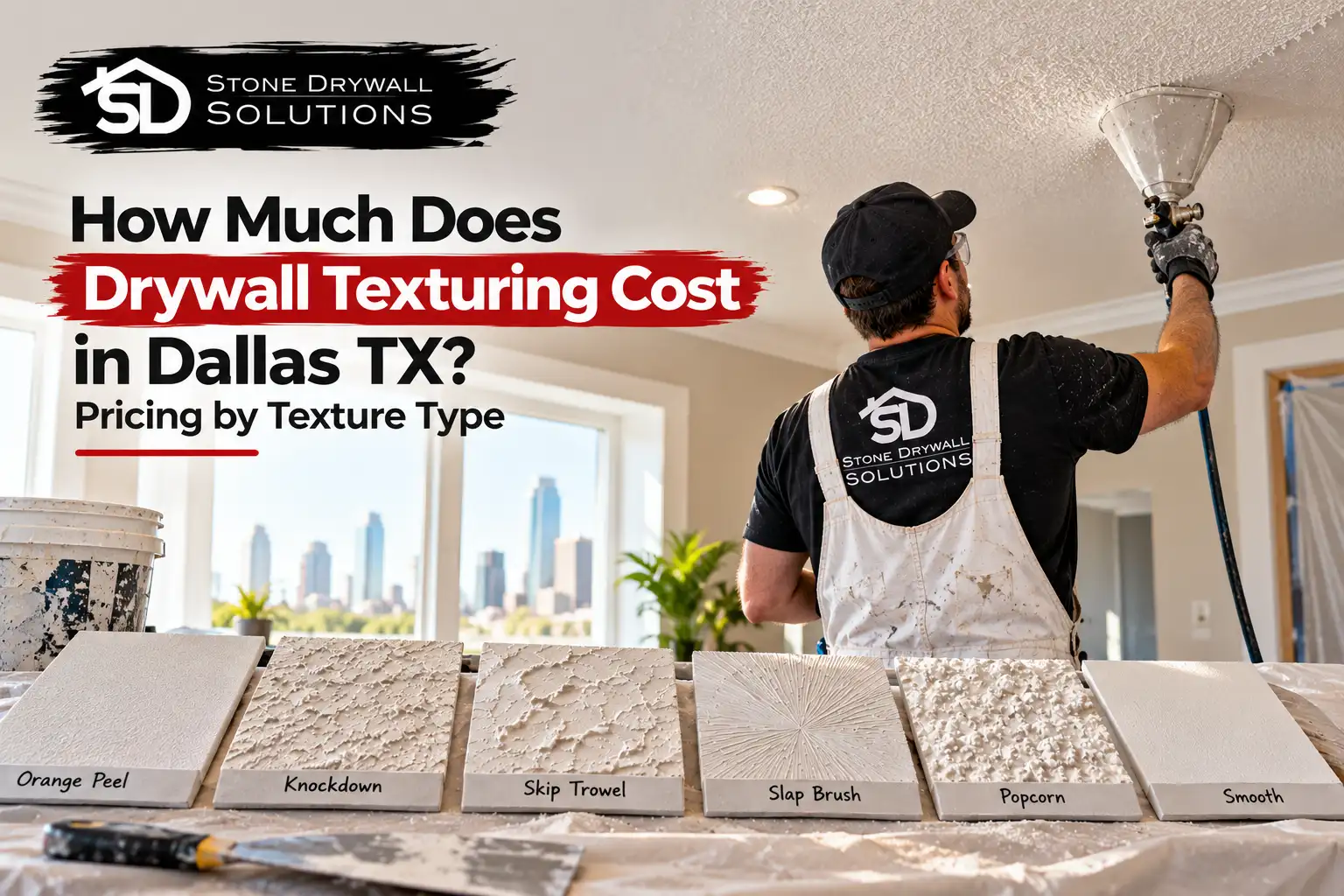
| Texture | Look | Application | Depth |
| Orange peel | Fine to heavy small bumps | Sprayed or rolled | Light to medium |
| Knockdown | Flattened, mottled pattern | Sprayed, then flattened | Medium |
| Skip trowel | Raised patches with gaps | Hand-troweled | Medium to heavy |
| Smooth | Flat and even | Thin coat or skim coat | None |
| Slap or stomp brush | Sunburst or petal pattern | Rolled, then slapped | Medium to heavy |
| Popcorn | Heavy, bumpy | Thick spray | Heavy |
| Spray sand | Fine, sandy grain | Sprayed | Light |
| Comb, Santa Fe, lace | Decorative patterns | Hand-applied | Varies |
How to Choose the Right Texture
Four questions narrow the field. What is the condition of the walls? Heavier textures hide more. What does the lighting do? Strong side light exposes flaws and favors deeper patterns. What style is the home? Match the texture to the architecture. Is there existing texture? Matching it keeps repairs and additions looking uniform.
A professional drywall texturing service in Dallas assesses wall condition and surface preparation before recommending a finish, which prevents common problems such as seams showing through a light texture.
Choosing a Drywall Texturing Contractor
Compare more than the price. Ask which textures are offered, whether samples or past work can be shown, whether the texture is sprayed or hand-applied, how the surface is prepared, and how the home is protected from overspray. Stone Drywall Solutions serves residential and commercial projects across the Dallas-Fort Worth area, and lists knockdown, orange peel, smooth, and slap brush finishes among its texturing options.
Questions Homeowners Ask About Texture Types
What is the most popular drywall texture?
Orange peel and knockdown are among the most popular, because they are practical, hide minor flaws, and suit many styles.
What is the difference between orange peel and knockdown?
Orange peel is a fine, even pattern of small bumps. Knockdown is flattened with a knife while wet, which leaves a broader, mottled look.
Which texture is easiest to clean?
Lighter textures such as fine orange peel and smooth finishes wipe down most easily, especially under washable paint.
Is a smooth wall better than a textured wall?
Not always. Smooth walls look crisp but show every flaw, so they need better preparation. Textured walls hide more imperfections.
Find the Finish That Fits the Room
The right texture balances style, lighting, and wall condition. For a Dallas home or business that needs a new texture or a match to an existing one, Contact Stone Drywall Solutions or call (469) 999-8302 to talk through the options.