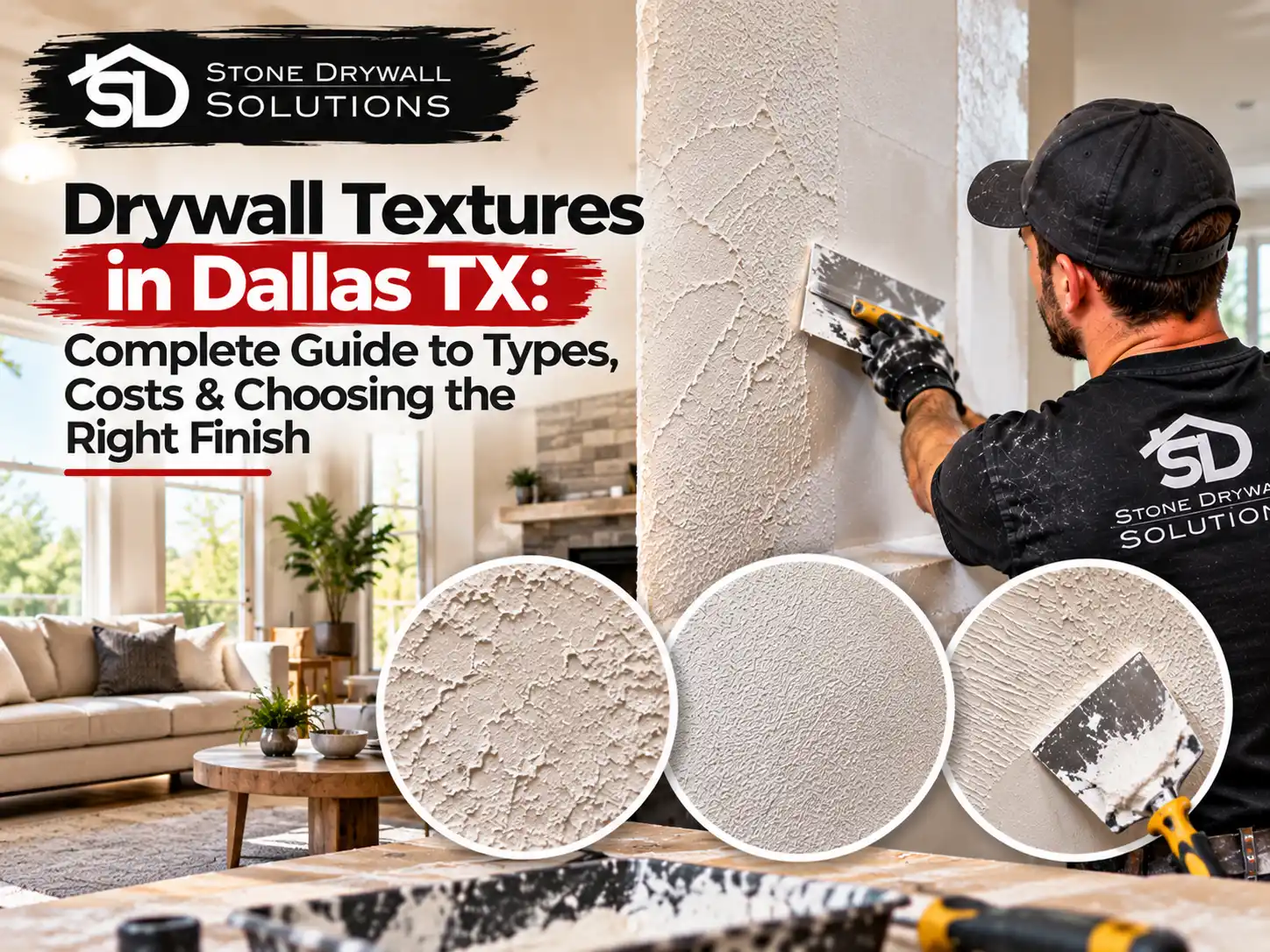
Walk into almost any home and the walls have a finish: a faint dimpled surface, a flattened splatter, a smooth skim, a ceiling with knobby bumps. That finish is drywall texture, and it does more than decorate. It affects how light plays across a room, how much surface imperfection shows, how easy a wall is to clean, and how hard a future repair will be to blend.
This guide covers the most common drywall texture types, how sprayed and hand-applied finishes differ, how to choose between them, what surface preparation involves, how texture matching works after repairs, what texturing typically costs, and how to pick a contractor in the Dallas area.
What Is Drywall Texture and Why Does It Matter?
Drywall arrives as flat gypsum panels. Once the seams are taped and covered with joint compound, the surface still shows faint ridges, fastener marks, and uneven patches. Texture is a layer of compound, sometimes mixed with additives, applied over the prepared surface to create a consistent pattern and soften those flaws. A smooth finish skips the pattern and relies on a very even surface instead.
Texture also serves practical purposes:
- It hides minor imperfections in the board, tape, and finishing.
- It diffuses light, which reduces glare and the harsh shadows that flat walls can show under side lighting.
- It sets the style of a room, from subtle and modern to rustic and old-world.
- It affects maintenance, since some patterns collect dust and are harder to clean than others.
Because texture covers entire surfaces, the choice also shapes every repair made later.
Common Drywall Texture Types
Orange Peel Texture
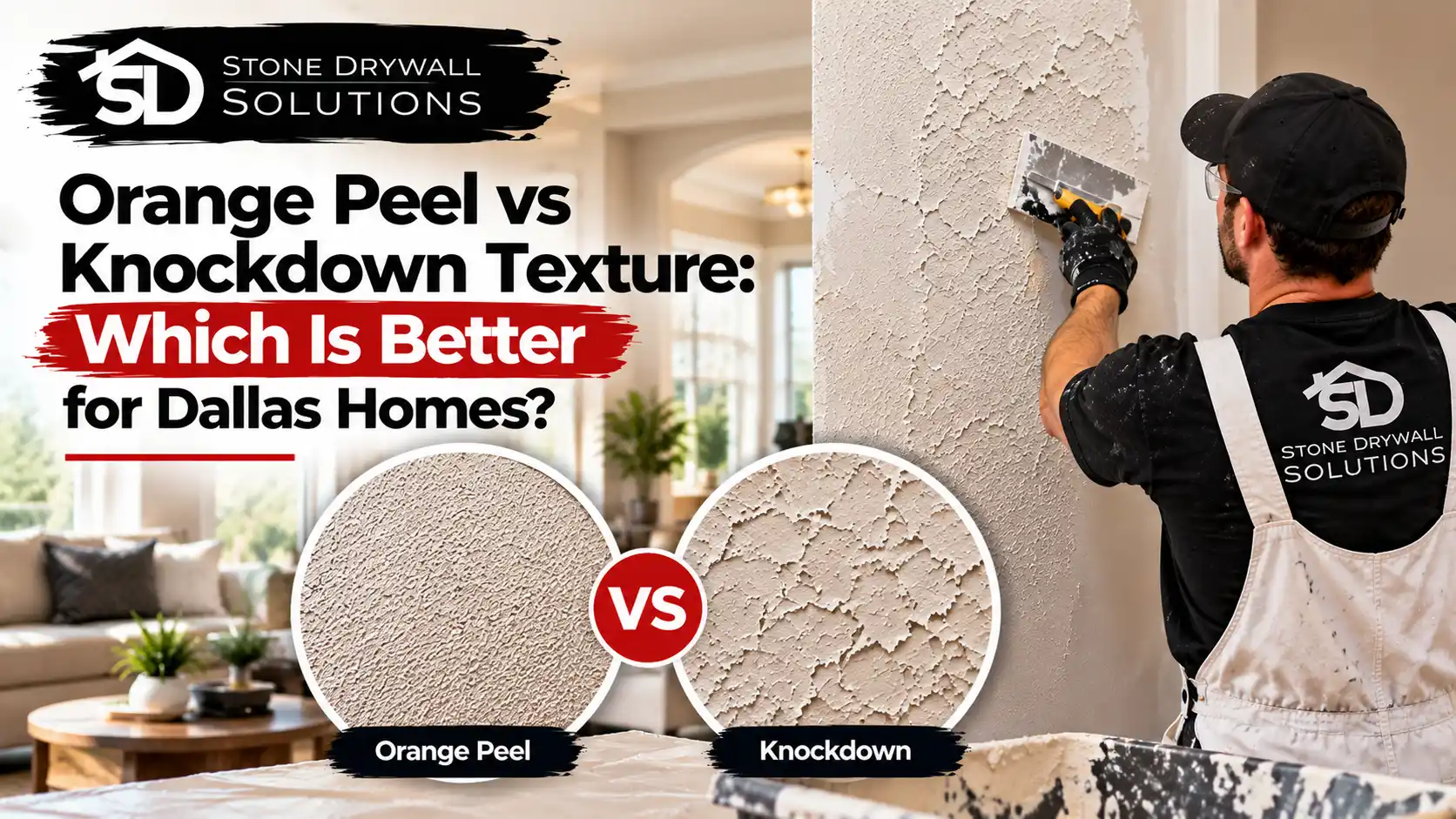
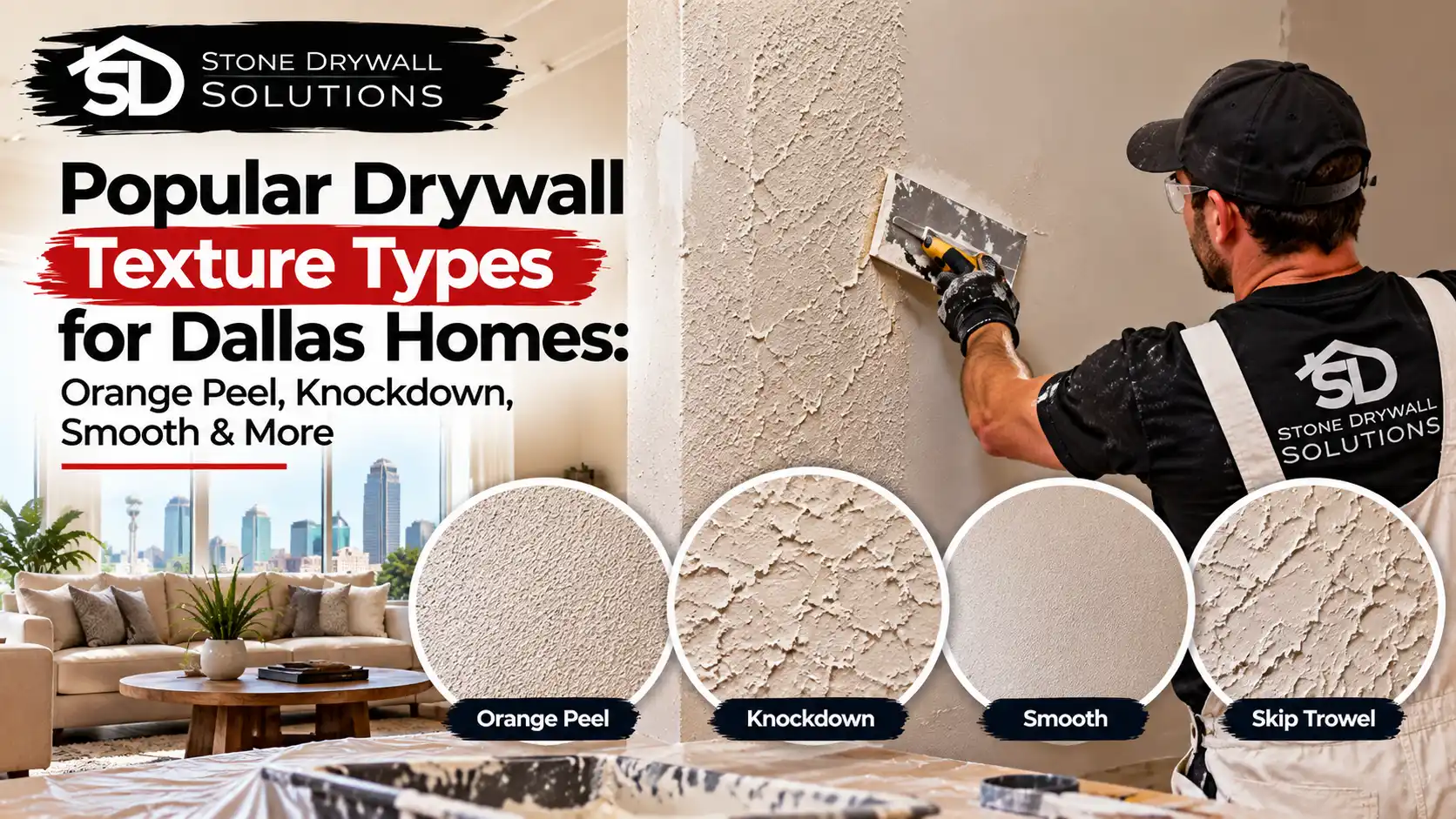
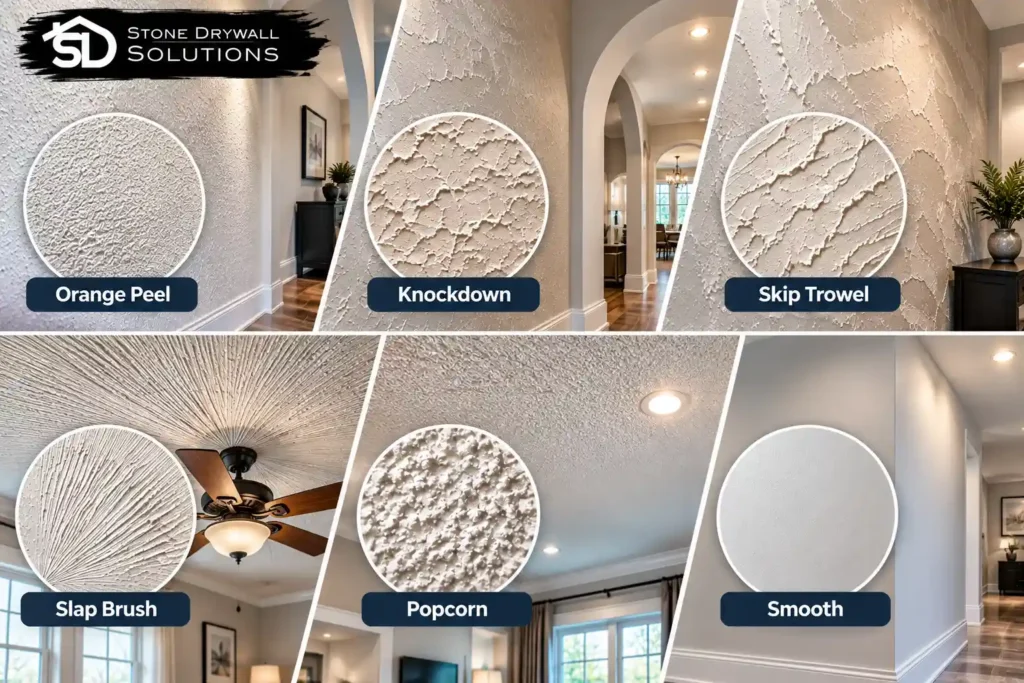
Orange peel texture is made by spraying a thin mix of drywall mud and water onto the wall, sometimes followed by a roller. The result is a pattern of small, gentle mounds and dimples that resembles citrus rind. It hides minor wall imperfections, it is easy to clean, and it works on walls and ceilings, which is why it suits busy, high-traffic rooms.
Knockdown Texture
Knockdown texture starts with compound that is sprayed, stomped, or brushed on, then dragged over with a flat tool while it is still wet. The tool flattens the peaks into a random, mottled pattern with a rustic, old-world feel. It is often paired with Mediterranean and Southwestern styles, and it is one of the textures Stone Drywall Solutions lists among its texturing services.
Skip Trowel
Skip trowel is a hand-applied variation of the knockdown family. A first coat is applied and allowed to set slightly, then a second coat is added by “skipping” a trowel across the surface, alternating pressure and direction. The result is a varied, hand-finished look with more depth than a sprayed pattern.
Slap Brush and Stomp Brush
A slap brush or stomp brush finish is made by pressing a large, long-bristled brush loaded with compound onto the surface, then pushing the mud around to form thin ridges. The density and direction of the pattern can be adjusted, and it is often used on ceilings, especially in large rooms where it helps disguise imperfections.
Popcorn Texture
Popcorn texture is a sprayed ceiling finish with knobby, unevenly spaced bumps. It hides ceiling flaws and dampens sound between floors, but it is hard to clean and hard to repair neatly. Popcorn ceilings applied before the 1980s may contain asbestos, so testing by a professional is advised before disturbing or removing one.
Smooth Finish
A smooth wall finish skips the pattern entirely. It is achieved with extra coats of compound and careful sanding, sometimes with a skim coat over the whole surface. Smooth walls look clean and modern, but they show every flaw under side light, so the preparation has to be better than for a textured wall.
Sprayed vs Hand-Applied Texture
Texture types fall into two broad categories based on how they are applied.
Sprayed textures include orange peel, popcorn, and many knockdown finishes. A sprayer applies compound quickly and evenly, so large areas can be done in a day for an average home. The pattern is consistent, and the cost per square foot is lower.
Hand-applied textures include skip trowel, stomp, slap brush, and other decorative finishes. They are applied with trowels, knives, and brushes, so each surface is a little different. They take longer, often one to three days for a typical home, and they cost more per square foot because of the time and skill involved.
Sprayed finishes suit even, uniform results at scale, and hand-applied finishes suit rooms where a custom look matters more than speed.
Wall Texture vs Ceiling Texture
Ceiling texture and wall texture don’t always match, and they don’t have to. Ceilings are lit from the side by windows and lamps, so flaws show more readily, which is why textured finishes are common overhead. Some homes use one texture on walls and another on the ceiling, such as a light orange peel on walls with a slap brush or knockdown on the ceiling. Others use a single finish throughout for a consistent look.
Ceilings also take more effort to texture, which is reflected in the cost.
How to Choose the Right Drywall Texture
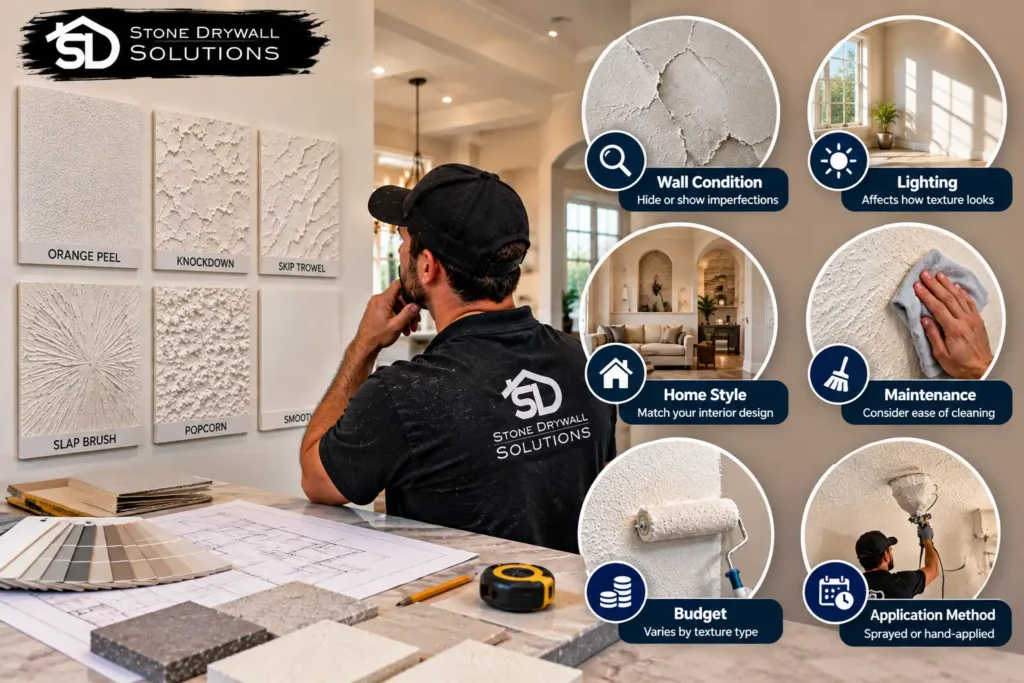
Several factors narrow the choice:
- Condition of the walls. Textures with more depth hide more flaws. Smooth finishes hide almost none.
- Lighting. Rooms with large windows or strong side light show texture, and flaws, more clearly.
- Style. Rustic and Mediterranean looks suit knockdown and skip trowel, while modern interiors often suit orange peel or smooth finishes.
- Cleaning. Gentle textures such as orange peel wipe clean more easily than deep, heavily ridged ones.
- Existing texture. In a home with an existing pattern, matching it keeps repairs and additions looking uniform.
- Budget. Sprayed finishes generally cost less than hand-applied ones.
| Texture | Look | Application | Best for |
| Orange peel | Fine, even dimples | Sprayed | Walls and ceilings, easy cleaning |
| Knockdown | Flattened, mottled pattern | Sprayed and troweled down | Rustic, Southwestern, Mediterranean styles |
| Skip trowel | Varied, hand-finished depth | Hand-applied | Custom or decorative looks |
| Slap or stomp brush | Ridged, adjustable pattern | Hand-applied | Ceilings and large rooms |
| Popcorn | Knobby bumps | Sprayed | Ceilings, sound dampening |
| Smooth | Flat and clean | Extra coats or skim coat | Modern interiors with well-prepared walls |
Surface Preparation Before Texturing
Texture is only as good as the surface under it. Preparation typically includes:
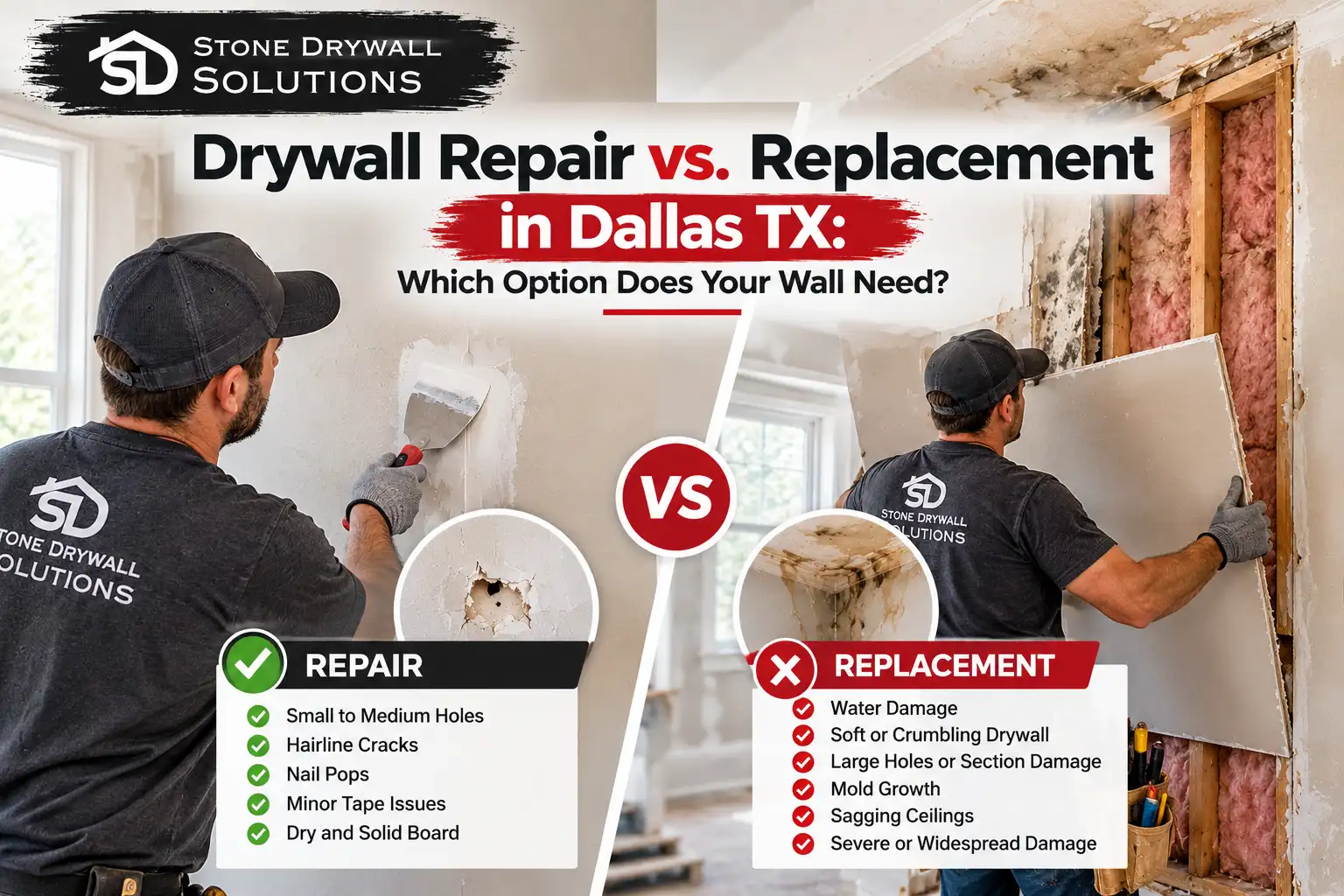
- Repairing damage. Holes, cracks, and failed seams are fixed before texture goes on, since texture doesn’t repair them.
- Taping and finishing the seams. Drywall is generally finished to a Level 3 standard before heavy texture, and a smoother Level 4 finish may be needed under thin or light textures that would otherwise show seams.
- Sanding and dust removal. Dust under texture weakens the bond.
- Priming. Primer evens out how the surface absorbs compound and paint.
- Masking. Floors, trim, windows, and fixtures are protected because sprayed texture travels.
Skipping preparation is the most common reason new texture cracks, peels, or shows seams through the finish.
Texture Matching for Repairs
Repairs are where texture gets tested. A patch can be sound and still stand out if the new texture doesn’t match the surrounding wall in pattern, size, thickness, and direction. Good matching depends on identifying the original technique, practicing the pattern, and blending it outward past the repair so there is no visible edge. The complete guide to drywall repair in Dallas covers how texture fits into patching, taping, sanding, and priming.
Painting Textured Walls
Texture changes how paint behaves. Textured surfaces use more paint than flat ones, and the finish chosen affects how much the pattern shows: flatter paints hide imperfections, while glossier ones highlight every peak. Primer helps new texture absorb paint evenly. For guidance on picking a sheen for Texas homes, this guide to the best paint finish for drywall in Texas is a useful companion.
How Much Does Drywall Texturing Cost?
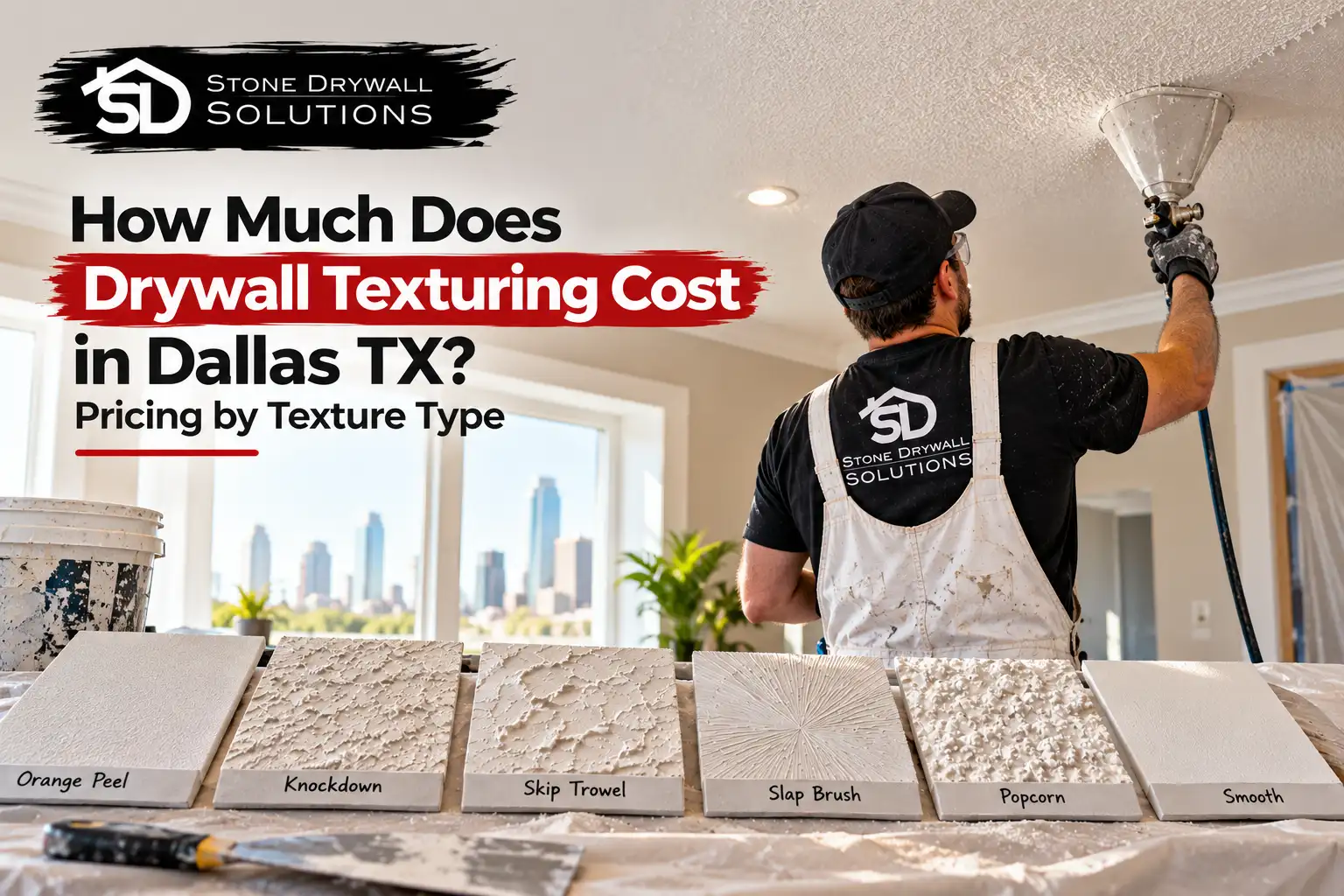
Contractors in the area generally quote texturing by the square foot of wall or ceiling surface, not floor space, and local rates aren’t widely published. These are general estimate ranges, not Dallas quotes:
| Work | Typical estimate range |
| Sprayed texture (orange peel, knockdown, popcorn), per square foot | about $0.80 to $1.50 |
| Hand-applied texture (skip trowel, slap brush, stomp), per square foot | about $1.50 to $2.00 |
| Smooth finish or skim coat, per square foot | about $1.00 to $3.00 |
| Removing popcorn and retexturing, per square foot | about $1.80 to $3.80 |
| Painting textured drywall, per square foot | about $1 to $3 more |
| Repairs before texturing, per project | about $300 to $950 |
Note: These figures are general estimates, not confirmed prices. The final cost depends on the texture type, application method, wall or ceiling height, surface condition, repairs needed, whether old texture has to be removed, and painting. A written, itemized quote after measurement is the only reliable number.
What moves the price:
- Texture type and method, since hand-applied finishes take longer
- Square footage of walls and ceilings, which is larger than floor area
- Ceilings versus walls, because overhead work takes more effort
- Surface condition and any repairs needed before texturing
- Removal of old texture, which adds a separate step
- Painting and priming, if they are part of the job
- Small-job minimums, which many contractors apply
Local Considerations in Dallas
Dallas and Dallas County homes span many decades of construction, and texture varies with the era. Older homes may have popcorn ceilings or layered past repairs, and testing may be advised before older texture is disturbed. Newer homes often have builder-grade sprayed finishes that need careful matching when walls are repaired or rooms are added. Humid summers and shifting clay soils can also bring hairline cracks, which a repair has to address before new texture is applied.
For homes and businesses that need a new finish or a match to an existing one, professional drywall texturing in Dallas starts with assessing the wall condition and preparing the surface before any texture goes on.
Choosing a Drywall Texturing Contractor
Compare more than the price. Useful questions include:
- Which textures are offered, and can samples or past work be shown?
- Is the texture sprayed or hand-applied, and why?
- How is the surface prepared and the seams finished?
- Are repairs, priming, and paint included in the quote?
- How is the home protected from overspray and dust?
- How will texture be matched to existing walls or ceilings?
Stone Drywall Solutions serves residential and commercial projects across the Dallas-Fort Worth area, and lists knockdown, orange peel, smooth, and slap brush finishes among its texturing options.
Frequently Asked Questions About Drywall Textures
What is the most common drywall texture?
Orange peel and knockdown are among the most widely used, because they are quick to apply, hide minor flaws, and are easy to live with.
Is knockdown or orange peel better?
Neither is better in general. Orange peel is finer and easier to clean, while knockdown is flatter and more rustic. The choice comes down to style, lighting, and wall condition.
Can drywall texture be removed or changed?
Yes. Texture can be scraped, skim coated, or covered, but removal adds a step and a cost, and older popcorn ceilings should be tested before disturbing them.
Can new texture match old texture?
Often, with the right technique. Matching depends on pattern, size, thickness, and blending outward past the repair.
Get the Right Finish for Your Walls and Ceilings
The right texture balances look, wall condition, and budget. For a Dallas home or business that needs new texture or a matching finish, Contact Stone Drywall Solutions or call (469) 999-8302 to talk through the options and request a written quote.