
A hole in a bedroom wall and a soft, stained ceiling can both be described as “damaged drywall,” yet they call for very different fixes. One is a patch and a coat of paint. The other may mean cutting out and replacing a section of board, and possibly fixing a leak first. Choosing wrongly costs money either way: replacing board that only needed a patch wastes labor, and patching board that has failed brings the problem back.
This guide explains how to decide between drywall repair vs replacement in Dallas, TX, which signs point to each option, how water damage changes the answer, and what to ask before approving any work.
The Short Answer: Repair Localized Damage, Replace Compromised Board
The deciding question is whether the drywall is still a solid, dry, stable base. If the board is firm, the paper is intact, and the damage is limited to a small area, repair is usually the better option. If the board is soft, swollen, crumbling, contaminated, or no longer holding together, replacement of the damaged section is usually the better one.
A repair works with the existing board by filling, patching, taping, and finishing. A replacement removes the compromised material and installs new drywall, then tapes and finishes the seams. Both end with the same goal: a wall or ceiling that looks like it was never damaged.
When Drywall Can Usually Be Repaired
Damaged drywall repair makes sense when the problem is localized damage and the board underneath is sound. Typical examples include:
- Nail holes, screw holes, and small to medium holes from hardware, doorknobs, and furniture
- Shallow dents that haven’t broken through the paper
- Hairline cracks at corners and seams, once the cause is understood
- A limited number of nail pops
- Minor tape failures at a single joint
- An old, dry stain where the source was fixed and the board is firm
In each case the patch bonds to material that is still strong. Medium holes can be covered with a reinforced patch, and larger holes can be repaired with a supported patch, where backing is secured behind the wall and a new piece is fitted, rather than replacing a full panel.
When Drywall Usually Needs Replacement
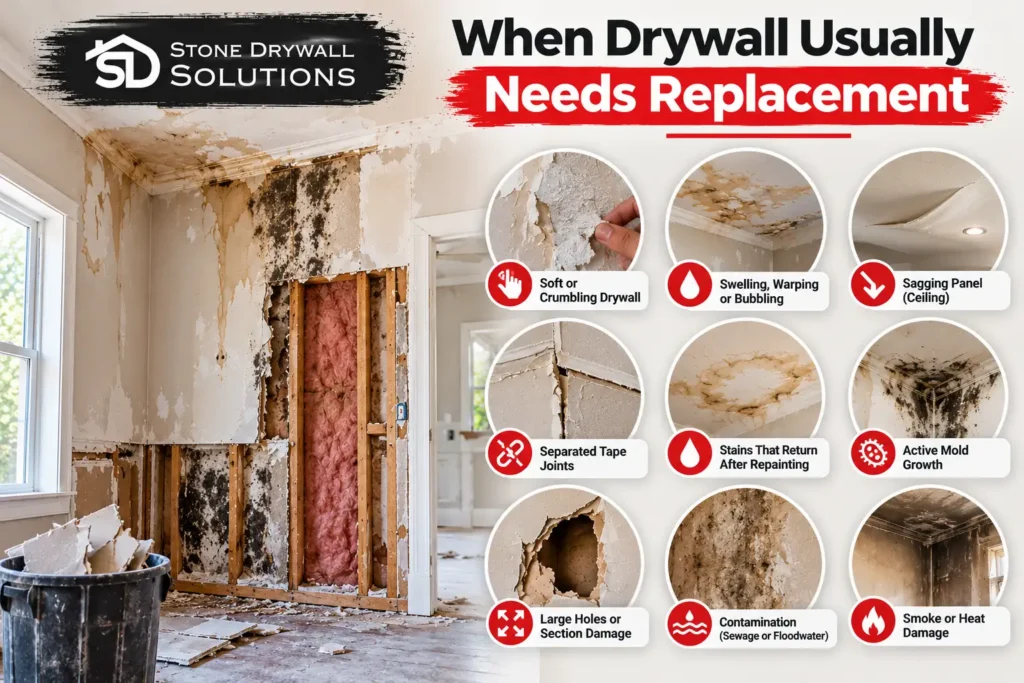
Drywall panel replacement becomes the better choice when the board has lost its strength or when the damage is more than skin deep. Signs include:
- Soft drywall that gives under light pressure, or crumbling edges
- Swelling, warping, or bubbling that doesn’t go away
- A sagging panel, especially on a ceiling
- Tape joints separating and baseboards pulling away from the wall after water exposure
- Stains that return after repainting, which points to moisture that is still reaching the board
- Contamination from sewage, floodwater, or other dirty water, since porous drywall can absorb it deeply
- Active mold growth
- Smoke or heat damage after a fire
- Material that stayed wet for days, even if the water was clean
If several of these appear together, replacement of the damaged section is far more likely to hold up than a cosmetic repair.
Water Damage: The Biggest Deciding Factor
Water damaged drywall replacement is the most common reason a repair turns into a replacement. Gypsum board absorbs moisture, and once it has been wet long enough, it loses strength, supports mold, and fails to hold paint.
Time matters. The EPA advises drying wet building materials within 24 to 48 hours to prevent mold growth, and fixing the water source so the damage doesn’t repeat. Drywall that was wet briefly with clean water, then dried fully, is sometimes salvageable. Drywall that stayed damp for days, or got wet from a source that is still active, usually isn’t.
Visible damage can understate the real problem, because moisture often travels into wall cavities and insulation beyond the stain. Three questions help decide:
- Is the source fixed? Without that, any drywall work is temporary.
- Is the board firm and dry all the way through? Surface dryness doesn’t always mean the core is dry.
- Is there a musty smell or visible growth? If so, mold may need to be assessed before the wall is closed up.
For what to check around damp walls in a humid climate, this guide on preventing mold growth on drywall in humid climates is a useful companion.
Replacement Doesn’t Always Mean the Whole Wall
Many homeowners assume replacement means tearing out an entire wall. In most cases, it means cutting out the damaged section back to solid, dry board and sound framing, fitting a new piece of drywall, then taping, finishing, texturing, and painting so the seams disappear.
That is a repair of the wall rather than a rebuild of it, and it is often what a “replacement” quote actually covers. Entire-panel or full-room replacement is typically reserved for widespread damage, such as a large leak, flooding, or fire.
Large Holes: Patch or Replace a Section?
Holes over about six inches sit in a gray zone. A supported patch works well when the surrounding board is firm and the framing gives a place to anchor backing. When the area around the hole is cracked, crumbling, or wet, a cut-out and replacement of that section is the better route. The size of the hole matters less than the condition of the board around it.
Ceilings: Repair vs Replace
Ceiling condition is judged more strictly than wall condition, because a failing ceiling can fall and because overhead problems often have a cause above them.
Small holes, nail pops, and hairline seam cracks in a firm ceiling can usually be repaired. Sagging is a different matter. Common causes include board that is too thin for the spacing of the framing, the weight of insulation, loose fasteners, and moisture. Re-patching a sag doesn’t solve any of those, so a sagging ceiling often needs to be replaced or reinforced, and checked for a leak first. A sag with a stain, a drip, or a bulge should be treated with caution, since water can collect behind the board.
Repeated Damage in the Same Spot
When the same crack, stain, or pop keeps returning, the usual explanation is that the cause was never fixed. Movement in the framing, a slow leak, loose fastening, or a failing seam can each undo a patch within weeks or months. That pattern is a signal to investigate before repairing again, and sometimes to replace the section and correct the underlying issue at the same time.
Repair vs Replacement Cost
Price is a common reason homeowners lean toward one option, so a rough picture helps. These are general estimate ranges for the Dallas area, not quotes:
| Work | Typical estimate range |
| Small hole repair | about $25 to $125 |
| Larger hole patch | about $55 to $210 |
| Crack repair | about $65 to $415 |
| Ceiling repair | about $230 to $1,350 |
| Water-damaged section replaced | about $620 to $1,600 |
Note: These figures are general estimates, not confirmed prices. The final cost depends on factors such as the size and extent of the damage, whether it is a wall or ceiling, access, texture matching, finishing, and any hidden damage or water issues found once the area is opened. A written, itemized quote after measurement is the only reliable number.
Replacement costs more than repair because it adds removal, new material, and more finishing steps. Leak repair, drying out framing, and mold assessment are separate costs from the drywall itself. The cheaper option on paper isn’t always the cheaper one in practice, since a repair that fails costs a second time.
How a Damage Assessment Works
A good assessment answers three questions before any compound or new board goes on: what is the condition of the material, how far does the damage extend, and what caused it. In practice that means checking the firmness of the board, looking at the edges and surrounding area, noting signs of moisture, and asking about the history of the spot.
An assessment also sets expectations. Hidden damage sometimes appears once the area is opened, so a good contractor explains how the scope could change and why. For a broader look at methods and what each repair involves, the complete guide to drywall repair in Dallas covers the full process.
Quick Decision Guide
| Situation | Likely route |
| Nail holes, small dents, hairline cracks | Repair |
| Medium hole in firm drywall | Repair with a patch |
| Large hole, firm surrounding board | Supported patch or section replacement |
| Soft, swollen, or crumbling board | Replace the damaged section |
| Old stain, source fixed, board firm and dry | Often repair |
| Stain that keeps returning | Find the source, then likely replace |
| Sagging ceiling | Check for a leak, then replace or reinforce |
| Sewage, floodwater, or active mold | Replace the affected board |
Choosing a Contractor for Either Option

Whichever option fits, a few questions separate a repair that lasts from one that doesn’t:
- What caused the damage, and how will the repair address it?
- Is this a patch or a replacement, and why?
- Will the seams, texture, priming, and paint be included?
- What happens if hidden damage is found once the area is opened?
- How is dust controlled, and what does cleanup include?
Stone Drywall Solutions serves residential and commercial projects across the Dallas-Fort Worth area, and a drywall repair service in Dallas starts by assessing the damage before deciding between repair and replacement.
Questions Homeowners Ask About Repairing or Replacing Drywall
Is it cheaper to repair or replace drywall?
Repair is usually cheaper for localized damage. Replacement costs more but is the better choice when the board is soft, swollen, or badly broken.
Can water-damaged drywall be saved?
Sometimes. If the water was clean, the source is fixed, and the board dried quickly and stayed firm, it may only need surface work. Drywall that stayed wet for days, got soft, or smells musty usually needs to be replaced.
Do I have to replace the whole wall?
Usually not. Replacement typically means cutting out the damaged section, fitting new drywall, and finishing the seams.
How do I know if my ceiling needs replacing?
A sag, a bulge, a spreading stain, or soft board are signs that replacement or reinforcement may be needed. A firm ceiling with small cracks or holes can often be repaired.
Get the Right Answer Before the Work Starts
Choosing between repair and replacement starts with a look at the actual damage. For a Dallas home with holes, cracks, soft spots, or water-stained walls and ceilings, contact the Stone Drywall Solutions team or call (469) 999-8302 to talk through the options.