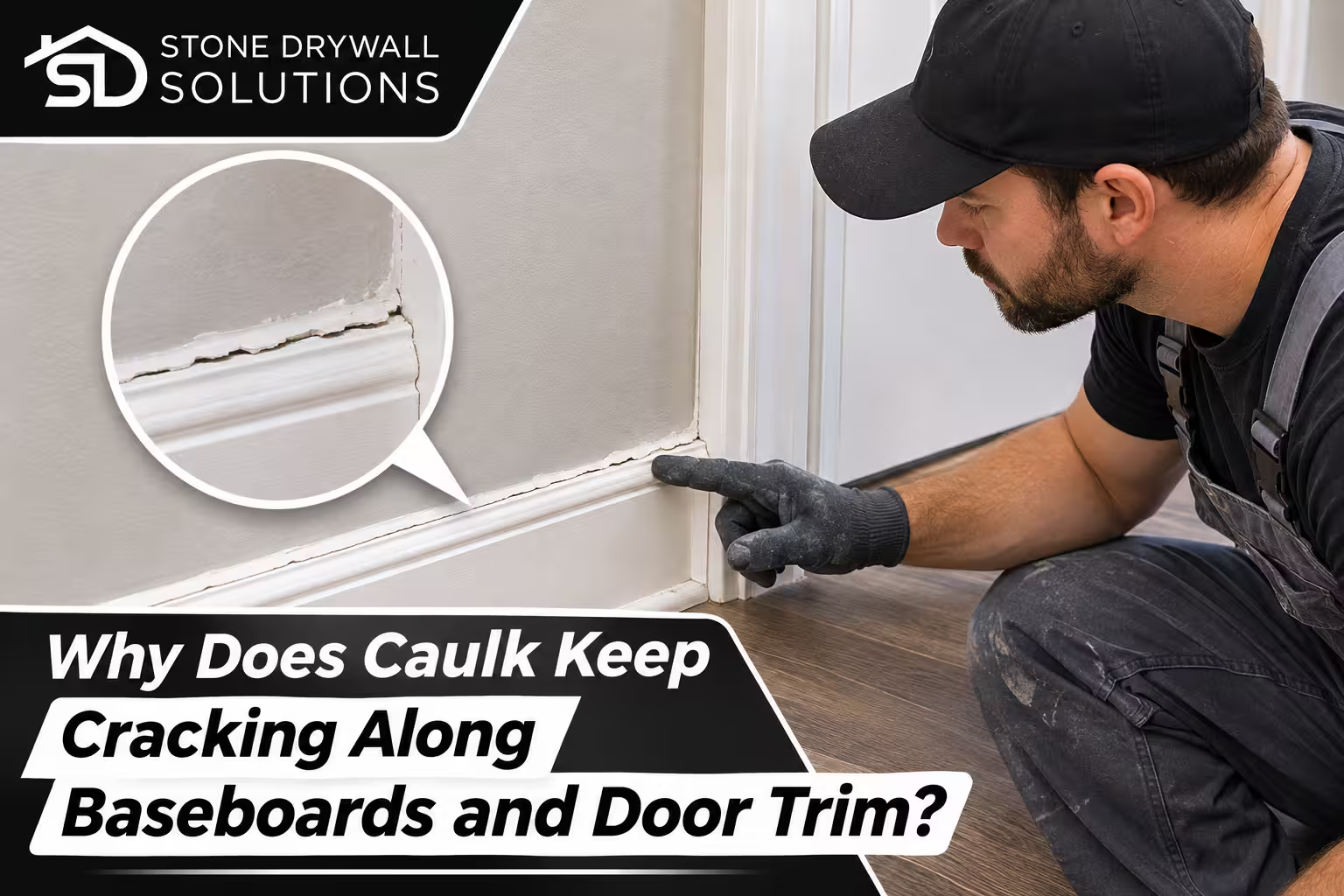
Fresh caulk can make baseboards and door trim look neat, but that clean finish sometimes disappears within months. Thin cracks develop along the wall, caulk begins peeling away from the trim, or the same gap reopens despite repeated repairs.
Caulk cracking along baseboards usually happens because of movement between building materials, poor surface preparation, incorrect caulk selection, or improper application. Wood trim responds to humidity changes, while walls and flooring may shift slightly under normal conditions. The caulk must accommodate these changes without losing its bond.
Most trim caulk problems are cosmetic, but recurring gaps may indicate loose trim or continuing movement in the building. Understanding why the joint failed is the first step toward making a more durable repair.
Why Does Caulk Crack Between Baseboards and Walls?
A baseboard and the wall behind it are separate building components. Even when installed tightly together, they may move differently as indoor conditions change.
Seasonal Wood Expansion and Shrinkage
Wood absorbs and releases moisture from the surrounding air. During humid conditions, it can expand slightly. When indoor air becomes drier, it contracts. This movement can change the width of the narrow gap between a baseboard and the wall. If the existing caulk lacks enough flexibility, it may split through the middle or separate from one surface.
Dallas homes experience changing outdoor humidity and extended air-conditioning use. Although indoor conditions depend on the home’s HVAC system and insulation, humidity fluctuations can influence the moisture content of interior wood trim. MDF baseboards can also respond to moisture changes, particularly when exposed edges are inadequately sealed.
Movement Between Different Materials
Walls, wooden trim, and door casings do not necessarily expand or contract at the same rate. Small changes in wall framing, flooring, or surrounding materials can place stress on the caulk joint. A properly selected sealant can accommodate limited movement. However, even flexible caulk has performance limits.
Why Does Caulk Around Door Trim Keep Separating?
Cracked caulk around door trim often develops where the casing meets the wall or around the upper corners of the opening. Door casings can experience additional stress from everyday use. Repeated door closing, vibration, and movement in the surrounding frame may gradually affect poorly secured trim. installation problems can make the condition worse.
For example, a door casing that is not firmly fastened may shift slightly when pressure is applied. Caulk cannot permanently compensate for trim that continues moving independently of the wall. The location of the gap can provide useful clues. A narrow separation along an otherwise stable casing often indicates a finishing issue. A gap that repeatedly widens after repair deserves closer inspection of the casing attachment and surrounding door frame.
Can Using the Wrong Caulk Cause Repeated Cracking?
Yes. Different caulking products have different levels of flexibility, adhesion, shrinkage, and paint compatibility. Choosing a product based only on its color or price may result in premature failure.
Standard Acrylic Latex Caulk
Acrylic latex caulk is commonly used for interior finishing because it is easy to apply, can be cleaned with water before curing, and is usually paintable. It works well for small, relatively stable joints. However, not every acrylic latex product has the same movement capability. Basic painter’s caulk may be unsuitable for a joint that regularly expands or contracts.
Flexible and Elastomeric Sealants
Higher-performance paintable acrylic and elastomeric sealants are designed to accommodate greater joint movement. These products can be useful around trim where seasonal movement causes repeated cracking. For example, certain elastomeric acrylic latex products are tested to ASTM C920 movement-performance requirements. The appropriate product must still be compatible with the wall finish and trim material.
Pure silicone caulk is generally not the preferred choice for painted interior baseboards because conventional silicone products do not accept ordinary paint well. For painted baseboards and door casings, a flexible, paintable sealant specifically approved for interior trim is usually the better option.
Why Does New Caulk Crack or Pull Away Shortly After Application?
When caulk fails within days or weeks, the application method deserves attention.
Poor Surface Preparation
Applying fresh caulk over dust, peeling paint, grease, or deteriorated old sealant can prevent proper adhesion. The new material may initially appear attached but gradually separate as it dries or experiences movement. Old caulk that has already lost its bond should generally be removed before resealing. Surfaces also need to be clean, dry, and suitable for the selected product.
Improper Application and Drying
An excessively thin bead may not provide enough material to bridge the joint. Conversely, applying too much caulk can create a thick, uneven finish and may increase drying time. Water-based caulks can shrink as moisture leaves the material during drying. Excessive joint depth or unsuitable application conditions can make this more noticeable. Paint timing also matters.
Some products can be painted relatively quickly, while others require considerably longer drying periods. Painting before the manufacturer’s recommended time can contribute to finish defects. A crack visible only in the paint film is not necessarily a failed caulk joint. Check whether the sealant itself has split or separated before deciding what needs replacement.
What Happens When Baseboard Gaps Are Too Wide?
Caulk is intended to seal appropriately sized joints. It is not a substitute for installing trim correctly. A wide gap may result from uneven walls, warped baseboards, inaccurate cutting, or loose fastening. Trying to fill the entire opening with a large amount of caulk can produce excessive shrinkage, poor adhesion, or an uneven appearance.
When Backer Rod May Help
Backer rod is a flexible foam material used to control sealant depth in appropriately sized joints. It reduces the amount of sealant needed and helps establish a suitable joint configuration. Some trim sealants specifically require backing material when joint depth exceeds the manufacturer’s stated limit.
However, backer rod is not automatically the correct solution for every baseboard gap. If the baseboard is loose, fastening it properly should take priority. A badly fitted or warped piece of trim may require adjustment or replacement. Filling the gap without correcting its physical cause is unlikely to produce a lasting finish.
How Can You Tell Whether a Caulk Crack Is Cosmetic or a Sign of Movement?
Most small interior trim gaps are ordinary finishing problems, but some patterns suggest that more investigation is appropriate.
| What You Notice | Possible Explanation |
| Thin gap that appears during one season | Wood shrinkage or normal material movement |
| Caulk peeling from one side of the joint | Poor adhesion or incompatible sealant |
| Repeated cracks around one door casing | Loose trim or frame movement |
| Wide gap beneath a baseboard | Flooring movement, uneven installation, or an improperly fitted baseboard |
| Gap continuing to widen over time | Ongoing movement requiring further assessment |
A recurring crack does not automatically mean a home has foundation damage. However, progressive separation accompanied by sticking doors, noticeably sloping floors, or other changes may justify inspection by a qualified building professional. Caulk should not be used to conceal a joint that is actively widening without understanding why.
How Do You Repair Cracked Caulk Along Baseboards and Door Trim?
A durable baseboard gap repair begins with removing failed material and checking whether the trim itself is stable.
For a typical cosmetic joint, the repair process includes:
- Inspect the trim. Check whether the baseboard or door casing moves when gently pressed. Loose sections should be secured before caulking.
- Remove failed caulk. Carefully cut or scrape away loose, cracked, or detached material without damaging the finished surfaces.
- Clean the joint. Remove dust and residue, then allow the surfaces to dry completely.
- Check the gap dimensions. Confirm that the opening is suitable for the selected caulk. Address oversized gaps according to the manufacturer’s instructions.
- Apply compatible sealant. Use a continuous bead that contacts both surfaces without excessive buildup.
- Smooth the joint. Tool the sealant within its recommended working time to create proper contact and a neat finish.
- Allow sufficient drying time. Follow the product instructions before painting or exposing the joint to additional movement.
Avoid applying fresh caulk directly over loose material just to hide the crack. The new bead may simply detach with the old one. For homeowners dealing with multiple failed interior joints, professional caulking services in Dallas, TX can help address deteriorated seals around baseboards, doors, and other trim.
How Much Does Baseboard and Door Trim Caulking Cost in Dallas, TX?
The cost of professional interior caulking depends on the amount of trim, existing caulk condition, and preparation required. Published 2026 pricing references provide a general professional caulking benchmark of approximately $1.25 to $4 per linear foot.
Using that range for initial budgeting:
| Caulking Length | Estimated Cost |
| 50 linear feet | 63–200 |
| 100 linear feet | 125–400 |
| 200 linear feet | 250–800 |
These are general market estimates rather than confirmed Dallas-specific contractor rates. Small jobs may involve minimum service charges.
Note: Prices are estimates only. Actual costs depend on joint length, removal of existing caulk, trim condition, materials, labor, accessibility, and additional repairs. A written, itemized quote following an on-site assessment provides the most reliable final price.
If the project involves loose baseboards, damaged door casing, or extensive repainting, those tasks may involve separate charges.
How Can You Prevent Baseboard Caulk From Cracking Again?
Preventing recurring cracks involves controlling conditions that place unnecessary stress on the joint. Keep indoor humidity reasonably consistent and address water exposure that could cause trim materials to swell. During new trim installation, allow wood products to acclimate according to the manufacturer’s recommendations and fasten them securely. Avoid relying on excessive caulk to compensate for poorly fitted trim.
For existing joints, inspect areas that have previously separated and replace deteriorated sealant before extensive peeling develops. When trim also requires refinishing, coordinating caulking preparation with interior painting in Dallas can help produce a consistent painted finish.
Stone Drywall Solutions states that its team has over 20 years of experience and offers interior caulking for baseboards, doors, and trim. Its interior finishing and repair services cover both residential and commercial properties.
Frequently Asked Questions
Should You Remove Old Caulk Before Applying New Caulk?
Yes, when the existing caulk is cracked, loose, or separating. Removing failed material creates a better surface for the replacement sealant to bond with. Sound existing material should only be retained when the new product’s instructions permit it.
Why Does Caulk Crack More Often During Winter?
Indoor heating can reduce relative humidity, causing wood trim to release moisture and shrink. This may increase the gap between baseboards and walls, putting additional tension on the caulk.
Can You Paint Over Cracked Baseboard Caulk?
Painting may conceal a very small surface imperfection, but it will not repair caulk that has separated from the wall or trim. Failed sealant should be corrected before repainting.
Is a Small Gap Between a Baseboard and Wall Normal?
Small gaps can develop from ordinary material movement or minor installation irregularities. A gap that remains narrow and stable is generally less concerning than one that repeatedly widens or accompanies visibly loose trim.
Stop Recurring Caulk Cracks With the Right Repair
Cracked caulk along baseboards and door trim is often caused by normal material movement, insufficient adhesion, unsuitable sealant, or poorly secured trim. Choosing a flexible product and preparing the joint correctly can improve repair durability, but recurring separation should be investigated rather than repeatedly covered. For interior caulking projects in Dallas, TX, contact Stone Drywall Solutions or call 469-999-8302 to discuss the condition of your trim and available service options.